
Mark Antony transformed Rome from republic to empire, yet history remembers him as the man who chose love over power. From Caesar’s right hand to Cleopatra’s lover, his story raises a timeless question: Was he a brilliant leader destroyed by propaganda, or did his own choices seal his fate? Understanding Antony means grappling with how political narratives shape our view of complex figures who stand at civilization’s turning points.

Picture this: September 2, 31 BCE, off Greece’s western coast. Cleopatra’s fleet breaks through enemy lines and flees toward Egypt. Moments later, Mark Antony—commander of Rome’s eastern provinces, conqueror of Caesar’s assassins—abandons his navy mid-battle to follow her. His remaining forces, stunned and leaderless, surrender within days.
That single choice, witnessed by thousands, would define Antony’s legacy for two millennia. Yet it tells only part of a far more complex story.
Mark Antony was born in Rome in 83 BCE into an age of violence and opportunity. He rose from a debt-ridden young man to become Caesar’s most trusted general, the orator whose funeral speech triggered civil war, and a triumvir who ruled half the known world. Though he died fighting Augustus, three of Rome’s first five emperors—Caligula, Claudius, and Nero—were his direct descendants.
This article examines Antony’s journey through five critical lenses. We’ll explore his formative years and rise alongside Caesar, document his decade-long struggle for power after the assassination, analyze what drove his decisions in the East, investigate how ancient propaganda shaped his reputation, and trace his surprising legacy through Rome’s imperial bloodline. What emerges is a figure far more nuanced than Shakespeare’s tragic lover or Cicero’s degenerate villain—a capable leader whose political missteps and personal choices transformed Roman history in ways neither he nor his contemporaries could have imagined.
From Debt to Dictatorship: Antony’s Early Ascent
Marcus Antonius was born on January 14, 83 BCE, into a Rome convulsed by civil war. Just months earlier, the dictator Sulla had marched on the city—the first time a Roman general had led legions against Rome itself. This violation of sacred tradition opened a door that would never fully close. Antony arrived into a world where military power trumped constitutional niceties, a lesson he’d internalize completely.
His family connection to Julius Caesar—through his mother Julia, Caesar’s cousin—would prove decisive, but his youth promised nothing of the sort. His father, Marcus Antonius Creticus, was one of those typical inept figures of the late Republic—given military command not for competence but political convenience. Creticus earned his nickname after an embarrassing defeat by Cretan pirates in 71 BCE, where he died either in combat or shortly after, leaving the family financially unstable and socially diminished.
What happened next reveals Antony’s character early on. Ancient historian Plutarch reports that young Antony fell in with Publius Clodius Pulcher and another youth named Curio, becoming “unrestrained in pleasures” and racking up massive debts—the equivalent of five million dollars today. Plutarch writes that Curio “engaged him in drinking bouts, and with women, and in immoderate and extravagant expenditures.” By age twenty, creditors hunted him through Rome’s streets.
This wasn’t uncommon among young aristocrats—Catiline, Clodia, even Caesar himself had been notorious spenders in their youth. But for Antony, without a father’s wealth to cushion the fall, the consequences were immediate and severe. He faced the real possibility of spending his life dodging creditors in Rome’s back alleys.
The escape route he chose—military service—became his salvation. In 57 BCE, Antony joined General Aulus Gabinius’s staff in Syria as cavalry commander. Here, removed from Rome’s political backstabbing, his natural talents emerged. He secured victories at Alexandrium and Machaerus in Judea, proving himself a capable military leader. When Gabinius moved to restore Egypt’s deposed Ptolemy XII to his throne—a controversial intervention—Antony’s performance caught attention.
But the real breakthrough came in Gaul. Between 52 and 50 BCE, Julius Caesar appointed Antony to his staff during the conquest of Gaul. The two men developed a close working relationship. Caesar, always shrewd about talent, recognized that Antony combined battlefield competence with personal charisma—qualities that mattered more than aristocratic refinement in the brutal business of conquest.
Caesar even wrote to Cicero urging support for Antony’s candidacy as quaestor. The gambit worked: Antony was elected to the position in 52 BCE, automatically entering the Senate. For a man who’d fled Rome to escape debt collectors years earlier, it was a remarkable turnaround.
Then came Caesar’s defining gamble. As tensions between Caesar and Pompey reached a breaking point, Caesar arranged for Antony to be elected as one of ten plebeian tribunes for 49 BCE. In this role, Antony could veto Senate actions harmful to Caesar’s interests—a critical defense as political enemies maneuvered against the general.
The crisis exploded when anti-Caesar factions violently expelled Antony from the Senate in 49 BCE. He fled to Caesar’s army. Caesar’s legions used Antony’s expulsion as a rallying point when they crossed the Rubicon River, igniting the civil war. Antony had become more than Caesar’s ally—he’d become Caesar’s justification for war.
At the Battle of Pharsalus on August 9, 48 BCE, Caesar commanded the right wing while Antony commanded the left against Pompey’s superior numbers. The result was decisive victory for Caesar. Though Caesar would chase Pompey’s forces for months more, Pharsalus effectively ended the Republic’s resistance to Caesar’s supremacy.
Caesar appointed Antony as governor of Italy during his absences in Africa and Egypt. Here, managing Rome’s heartland, Antony’s political inexperience showed. When Tribune Publius Cornelius Dolabella proposed canceling all outstanding debts, Antony opposed the measure—partly because he believed Caesar wouldn’t support such radical relief, partly because he suspected Dolabella had seduced his wife. The controversy damaged Antony’s standing.
Yet when Caesar returned and assumed his fifth consulship in 44 BCE, he made Antony his co-consul. By 44 BCE, Caesar had been designated dictator for life. At the pinnacle of power, with Caesar positioning himself as Rome’s permanent ruler, Antony stood as second-in-command.
Then came the Ides of March. Antony heard rumors of a plot against Caesar but was unable to warn him in time. On March 15, 44 BCE, conspirators led by Brutus and Cassius murdered Caesar in the Senate.
Funeral Orations and Fatal Missteps
The days following Caesar’s assassination revealed both Antony’s strengths and his critical weaknesses. Antony fled Rome dressed as a slave initially, but quickly returned to protect Caesar’s legacy. He seized the state treasury and all of Caesar’s property and documents, effectively positioning himself as Caesar’s heir.
What happened next became legendary. At Caesar’s funeral, Antony gave the eulogy, dramatically removing the toga from Caesar’s body to show the crowd his stab wounds, pointing at each and naming the men who struck the blows. This funeral oration fundamentally changed Roman history, unleashing events that forced Caesar’s murderers to flee the city.
The speech demonstrated Antony’s oratorical power—the ability to channel public emotion toward political ends. For a moment, he seemed perfectly positioned to inherit Caesar’s mantle. Caesar’s will revealed he’d left 300 sesterces to every Roman man and donated his gardens as public parks. Publishing this helped Antony gain political influence over Rome’s people.
But Caesar’s will contained something else: his adopted heir was his eighteen-year-old great-nephew, Octavian. Antony was reluctant to hand his old friend’s fortune to a teenager and quickly became Octavian’s rival. When Octavian arrived in Rome in May to claim his inheritance, though Antony had amassed political support, he refused to relinquish Caesar’s vast fortune.
This proved a catastrophic miscalculation. Octavian borrowed heavily to fulfill Caesar’s bequests to Roman citizens and veterans, and established his own veteran bodyguard. Antony fatally underestimated his young rival’s ability. While Antony controlled Caesar’s estate and papers, Octavian possessed something more valuable: Caesar’s name and the loyalty it commanded.
The Senate increasingly viewed Antony as a new tyrant. Worse, when Antony opposed a motion to elevate Caesar to divine status—likely trying to prevent Octavian from claiming divine lineage—he lost support among many Caesarians.
By 43 BCE, open conflict erupted. When Antony illegally marched against Decimus Brutus, one of Caesar’s assassins, the Senate declared him an enemy of the state. Consuls Hirtius and Pansa, alongside young Octavian, marched against him. Antony was driven back at Mutina and Forum Gallorum, suffering his first major defeat.
But here Antony showed strategic brilliance. Though narrowly defeated, he masterfully maintained his battered forces during the withdrawal. More importantly, both consuls died in the fighting. Rather than press his advantage against the weakened Antony, Octavian recognized that eliminating Antony would leave him isolated against the Senate.
Octavian met with Antony and Marcus Aemilius Lepidus to form the Second Triumvirate in 43 BCE. They split Rome’s provinces: Octavian would rule the West, Antony the East, and Lepidus Africa. The alliance brought immediate benefits—and immediate horrors.
The triumvirs imposed proscriptions—legal death sentences against political enemies whose property would be confiscated. Antony forced Octavian to give up Cicero, Antony’s personal enemy and Octavian’s friend, who was killed on December 7, 43 BCE. Though less bloody than Sulla’s earlier proscriptions, the two-month campaign traumatized Roman society.
The triumvirs turned east to confront Caesar’s assassins. At the Battle of Philippi in October 42 BCE, though the initial battle was evenly matched, Antony’s leadership routed Brutus’s forces on October 23. Brutus committed suicide after the defeat, and over fifty thousand Romans died in the two battles.
The victory at Philippi established Antony’s reputation as a general. With Caesar’s assassins eliminated and the triumvirate in control, Antony departed for the East to organize his provinces and, fatefully, to summon Queen Cleopatra to answer charges that she’d aided his enemies.
The Queen and the East: Antony’s Transformation
In 41 BCE, Antony began an affair with Egyptian Queen Cleopatra. But to call it merely an affair misses the point entirely. What developed was a political and personal alliance that would reshape the Mediterranean world.
Mark Antony and Cleopatra were partners for eleven years and had three children together. Apart from their mutual affection, the alliance was politically useful: Cleopatra needed Antony to revive her kingdom’s old boundaries, and Antony needed Egypt as a source of supplies and funds.
Think about Antony’s situation in practical terms. As governor of Rome’s eastern provinces, Antony’s role involved managing the ambitious campaign in Gaul and maintaining stability while Caesar was absent. Egypt wasn’t just wealthy—it was Rome’s breadbasket, producing grain that fed the capital. An alliance with its queen made strategic sense.
The queen gave birth to twins, Alexander Helios and Cleopatra Selene. But Antony was soon forced back to Rome by crisis: his brother Lucius Antonius and wife Fulvia rebelled against Octavian in Italy in 40 BCE. Octavian defeated the rebellion, capturing and destroying Perusia.
After Fulvia died in the meantime, Antony married Octavian’s sister Octavia at Brundisium to cement their reconciliation. The two men divided the empire between them—Octavian taking everything west of Scodra, Antony everything east. It seemed like a stable arrangement.
For several years, Antony focused on military campaigns in the East. His general Ventidius dealt with a Parthian invasion while Antony managed provincial affairs. In 37 BCE, Herod was installed as king of Judaea with Antony’s backing. When Octavian faced problems in Italy and the West, Antony met him at Tarentum in 37 BCE, supplied him with ships, and agreed to renew the triumvirate for another five years.
But then came disaster. A long-prepared attack on Parthia in 36 BCE failed with heavy losses—Antony’s first military failure. The campaign, meant to secure Rome’s eastern frontier and enhance Antony’s prestige, instead exposed his vulnerabilities.
At this point he turned again to Cleopatra, who had borne him two children and given him full political and financial support. They had a third child, Ptolemy Philadelphus. More significantly, the lovers grew increasingly public in their relationship, participating in deification ceremonies where they took roles as Greco-Egyptian gods Dionysus-Osiris and Venus-Isis.
In 34 BCE, Antony staged the “Donations of Alexandria”—a ceremony that would prove politically catastrophic. He paraded his three children with Cleopatra and Caesarion (Cleopatra’s son by Julius Caesar) in costumes as legitimate royal heirs, flaunting Roman law’s refusal to acknowledge marriage with outsiders. He publicly declared territorial grants to Cleopatra’s children, effectively redistributing Roman-controlled territories.
Here’s where Antony’s political tone-deafness became fatal. Unlike many leading Romans, Antony’s real failing was his political naivety and failure to grasp political optics—he reveled in his notoriety but didn’t appreciate the damage this did to his political capital. While he may have seen himself as creating a stable eastern alliance combining Roman military might with Ptolemaic wealth, Romans saw something different: their general playing eastern king with a foreign queen, treating Roman territories as personal gifts.
By 32 BCE, Antony divorced Octavia. The move was both personally cruel—Octavia had remained loyal—and politically suicidal. It gave Octavian the perfect opening.
How to Destroy a Reputation: Octavian’s Propaganda Victory
What happened next demonstrates how effective propaganda can be more powerful than military force. Octavian seized Antony’s will from the Vestal Virgins in 32 BCE, revealing bequests to Cleopatra’s offspring and Antony’s plans to be buried in Alexandria. Suetonius reports that Octavian read it aloud, branding Antony a traitor to Rome.
The will’s authenticity remains debated. Some historians believe it may have been false or forged, while others argue it was legally valid. Regardless of authenticity, its public reading worked brilliantly. Octavian’s propaganda depicted Antony as enslaved by a foreign queen, which eroded his rival’s support.
Think about the narrative Octavian constructed. He didn’t declare war on Antony—a fellow Roman and triumvir. Instead, Octavian declared war on Cleopatra in 32 BCE. This was genius. It allowed Romans who supported Antony to save face by framing the conflict as Rome versus Egypt rather than Roman versus Roman. It portrayed Antony not as a political rival but as a victim of foreign seduction.
Cicero’s earlier attacks had already laid groundwork. In his Philippics, Cicero used invective to denigrate Antony, portraying him as antisocial, embodying moral taras and vices, describing him as an enemy of the state and a tyrant. Cicero and Octavian, two of history’s sharpest political adversaries, gave us the Antony we know today.
The propaganda had real effects. Antony’s enemies rallied to Octavian, but his forces gained early successes. By early 31 BCE, both sides were mobilizing. Antony positioned his forces at Actium on Greece’s western coast with about 500 ships and roughly 65,000 infantry. Octavian approached from the north with about 400 ships but 75,000 infantry, occupying Patrae and Corinth.
Octavian’s occupation of Corinth was crucial—it allowed his general Marcus Agrippa to cut off Antony’s communications and supply lines from Egypt. This strategic move forced Antony into a corner. Time was on Octavian’s side: Agrippa’s operations had isolated Antony and Cleopatra’s army, and hunger was wearing out Antony’s men.
Octavian wisely refused to be lured into land battle—because Mark Antony was by far the better commander on land. Instead, he forced Antony to fight at sea, where his friend Agrippa was an excellent admiral, whereas Mark Antony had never shown himself capable at naval command.
As months passed through winter into spring 31 BCE, Antony’s position deteriorated steadily. Agrippa conducted raids along the coast, capturing key supply bases including Leucas. Each success tightened the noose. Disunity increased between Antony, his generals, and Cleopatra. Antony’s generals didn’t trust Cleopatra or her armies but realized that if she left, many Romans—especially those who saw this as a war of conquest rather than civil war—would quit supporting Antony.
The debate within Antony’s camp grew heated. One of his centurions reportedly opposed the idea of naval combat, saying “Why dost thou distrust these wounds and this sword and put thy hopes in miserable logs of wood? Let Egyptians and Phoenicians do their fighting at sea, but give us land, on which we are accustomed to stand and either conquer our enemies or die.” The soldier understood what Antony perhaps didn’t want to admit: his strength was legionary infantry, not naval forces.
Yet Antony was trapped. To retreat north would mean abandoning his supplies and facing Octavian’s larger land forces on unfavorable terms. To remain meant starvation. Fighting at sea offered the only chance—not necessarily to win decisively, but to break through and escape to Egypt where he could regroup.
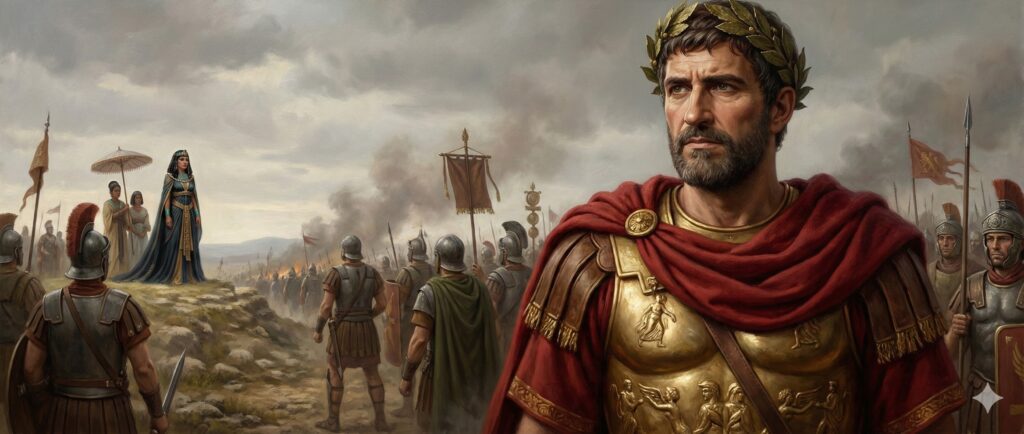
On September 2, 31 BCE, around midday when northern winds typically pick up on the Mediterranean, Antony moved his fleet out to break Octavian’s blockade. The timing was deliberate: those winds would favor anyone trying to sail south toward Egypt. Antony commanded 250 of his larger galleys with towers full of armed men, having burned many ships he couldn’t adequately crew. Octavian had 400 galleys under Agrippa’s command positioned outside the gulf.
The two fleets met in what became one of antiquity’s most consequential naval engagements. Antony and Lucius Gellius Poplicola commanded the right wing, Marcus Octavius and Marcus Insteius the center, while Gaius Sosius commanded the left wing. Cleopatra’s squadron was held in reserve behind them. On Octavian’s side, Agrippa commanded from the left wing, Lucius Arruntius the center, and Marcus Lurius the right.
Agrippa utilized smaller, more maneuverable ships, demonstrating the importance of agility over size. His tactical innovation—vessels that could swarm and disable larger ships rather than trying to match them in direct combat—proved decisive. His fleet used the “harpax”—a grappling hook fired from ballistas that would latch onto enemy ships. Rather than traditional ramming attacks that would’ve been ineffective against bronze-plated quinqueremes, lighter units circled larger enemy vessels, covering their decks with arrows and ballistae fire, crushing oars and breaking rudders before closing for boarding.
Then came the moment that defined Antony’s legacy. After heavy fighting, Cleopatra broke from engagement with 60 of her ships and set course for Egypt. Antony then broke through enemy lines and followed her. He’d won a tactical victory—breaking out from the Gulf of Ambracia—but suffered strategic defeat, losing his army and his reputation as a commander who’d never abandon his men.
Antony’s remaining forces immediately surrendered to Octavian. The battle was over in hours, not days. Octavian lost fewer than 5,000 men, securing victory through naval agility and psychological collapse rather than brute force.

The Villain or the Villainized? Historical Debates
Was Antony truly the dissolute, irrational figure ancient sources depict? Or was he the victim of history’s most effective character assassination? This question has divided scholars for two millennia.
Most accounts of Mark Antony’s life come from highly biased sources, mainly from Cicero and Plutarch. Marcus Tullius Cicero, his contemporary and sworn enemy, compiled a very negative and one-sided account, often making it difficult to understand the true nature of Mark Antony. Plutarch, writing more than a century later under the dynasty Augustus founded, had access to memoirs and histories that no longer survive—but all filtered through an Augustan worldview.
Consider the source problem systematically. Virtually everything we know about Antony comes from his enemies or from historians writing under the dynasty his enemies founded. Cicero’s Philippics—fourteen speeches attacking Antony—were delivered in real time as events unfolded, making them valuable primary sources. But Cicero wasn’t documenting history; he was making it, using rhetoric as weapon. When he describes Antony’s drunkenness, sexual excesses, and moral corruption, we’re reading political invective designed to destroy an opponent’s reputation, not objective biography.
Ancient sources more often represent Antony as villain than hero, reflecting various political persuasions. The openness of sources to interpretation has led modern writers to reach very different assessments of Mark Antony’s character. This historiographical divide reveals as much about changing scholarly fashions as about Antony himself.
Early modern historians largely accepted the ancient narrative. Antony was the tragic figure led astray by passion—a capable general whose weakness for Cleopatra doomed him. This interpretation dominated through the Victorian era, when it fit nicely with narratives about masculine duty versus feminine seduction.
The twentieth century brought revisionism. Some modern historians take sharply different positions. One historian notes that “between 60 BCE and 31 BCE, six men competed to control Rome under the Triumvirates. Mark Antony died clutching the silver medal for control over the most ridiculously powerful state the western hemisphere ever saw. That’s not a position someone ends up in accidentally.” This perspective emphasizes Antony’s genuine capabilities rather than his alleged failings.
This raises fascinating questions about Antony’s intentions. Before war broke out, Antony wrote to the Senate that he wanted himself and Octavian to both give up their positions as triumvir and restore power to the Senate. Though ancient historian Cassius Dio dismisses this as trickery, modern scholar Tatum argues there’s no reason to believe Antony’s offer was disingenuous—it would’ve been in his self-interest to see the Republic restored, as it would’ve increased his popularity without greatly affecting his eastern power base.
What about the Donations of Alexandria? These ceremonies are rooted in Hellenistic, imperialistic ideology, and it’s unwise to adopt the view that Antony was planning to rule the Roman world as a Hellenistic king. Some scholars argue Antony was simply adapting to eastern political realities—combining Roman administration with local royal traditions—rather than rejecting Rome entirely.
Yet Antony’s defenders must confront his genuine mistakes. He was “a flawed, naïve politician, prone to arrogance” who could be “a loyal friend and the bitterest of enemies. A heavy drinker and inveterate womanizer”. His real failing was political naivety and failure to grasp political optics—he reveled in notoriety but didn’t appreciate the damage to his political capital.
The historiographical debate extends to his military capabilities. No one disputes his battlefield brilliance—Philippi proved that. But his failed Parthian campaign in 36 BCE was his first military failure, and Mark Antony had never shown himself capable as a naval commander. His decision to fight at Actium at sea, where he was weakest, suggests either desperation or poor judgment.
Was his flight from Actium cowardice or contingency planning? Antony and Cleopatra’s plan seems to have been to deploy the fleet to win, but failing that, to break through and make a run for Egypt. They ordered sails kept on ships at ready and put war chests on Cleopatra’s fastest transports. This suggests the “escape” may have been premeditated rather than impulsive.
We must always remember that Antony’s reputation was fatally compromised by some of the most effective propaganda ever deployed. “How much the villain and how much the villainized is always debatable”.
The truth likely lies between extremes. Antony was “an incredible soldier, a capable orator, and a leader of men”, but also someone who made catastrophic political miscalculations. He underestimated Octavian, misread Roman sentiment about Eastern kingship, and failed to counter his opponent’s propaganda effectively.
Some scholars argue that had Antony won at Actium, he would’ve tried to impose a more blatant Hellenistic style of kingship over the Roman world, which would’ve been unpopular with the senatorial class and likely led to his eventual assassination. Others counter that while unlikely to restore the second-century BCE Republic, he would’ve coped with changing politics in his own way, certainly different from what Augustus eventually created.
What we can say with certainty: Antony was a complex figure whose military genius and political failures were equally genuine. The question isn’t whether he was hero or villain, but whether we can see past two thousand years of imperial propaganda to understand the actual man.
Bloodlines and Ironies: Antony’s Unexpected Legacy
Here’s the supreme irony of Mark Antony’s story: Although he died fighting Octavian’s efforts to become Rome’s sole monarch, three of the first five Roman emperors—Caligula, Claudius, and Nero—were Antony’s direct descendants.
How did this happen? Through his daughters with Octavia. Antony and Octavia had two surviving daughters: Antonia Major and Antonia Minor. Antonia Minor married Nero Claudius Drusus, Augustus’s stepson, and produced several notable descendants.
Through this marriage, Antonia became mother to the general Germanicus and Emperor Claudius, grandmother to Emperor Caligula, and great-grandmother to Emperor Nero. Think about that: the man Octavian defeated and whose memory he tried to erase ended up as ancestor to much of the Julio-Claudian dynasty. When Caligula went mad, when Claudius annexed Britain, when Nero fiddled as Rome burned—Antonian blood pulsed through their veins.
Antonia Minor herself became a formidable political figure. She was known for her intelligence and political acumen, actively caring for her family’s interests and the upbringing of various children in the imperial family. She played a crucial role in foiling a conspiracy led by Sejanus against Emperor Tiberius in 31 CE—showing that political savvy was indeed Antonian inheritance. When her daughter Livilla was accused of conspiring with Sejanus, some sources claim Antonia locked her in a room until she starved to death, demonstrating that ruthlessness also ran in the family.
Her relationship with her descendants was complex. She reportedly told people that her son Claudius was “a monster, a man whom nature didn’t finish but only began.” If she wanted to insult someone’s intelligence, she’d say they were “a bigger fool than even my son Claudius.” When that “fool” became emperor, he proved more capable than anyone—including his mother—had imagined, successfully conquering Britain and annexing several provinces.
The irony deepens when you consider that Caligula, who Antonia helped raise, reportedly refused to meet with his grandmother without witnesses present once he became emperor. Some historians claim his unkind treatment prompted her suicide in 38 CE, though others suggest Caligula may have poisoned her. Either way, the dynasty Antony’s enemies founded ended up consuming itself in precisely the kind of violence and paranoia Antony had helped unleash.
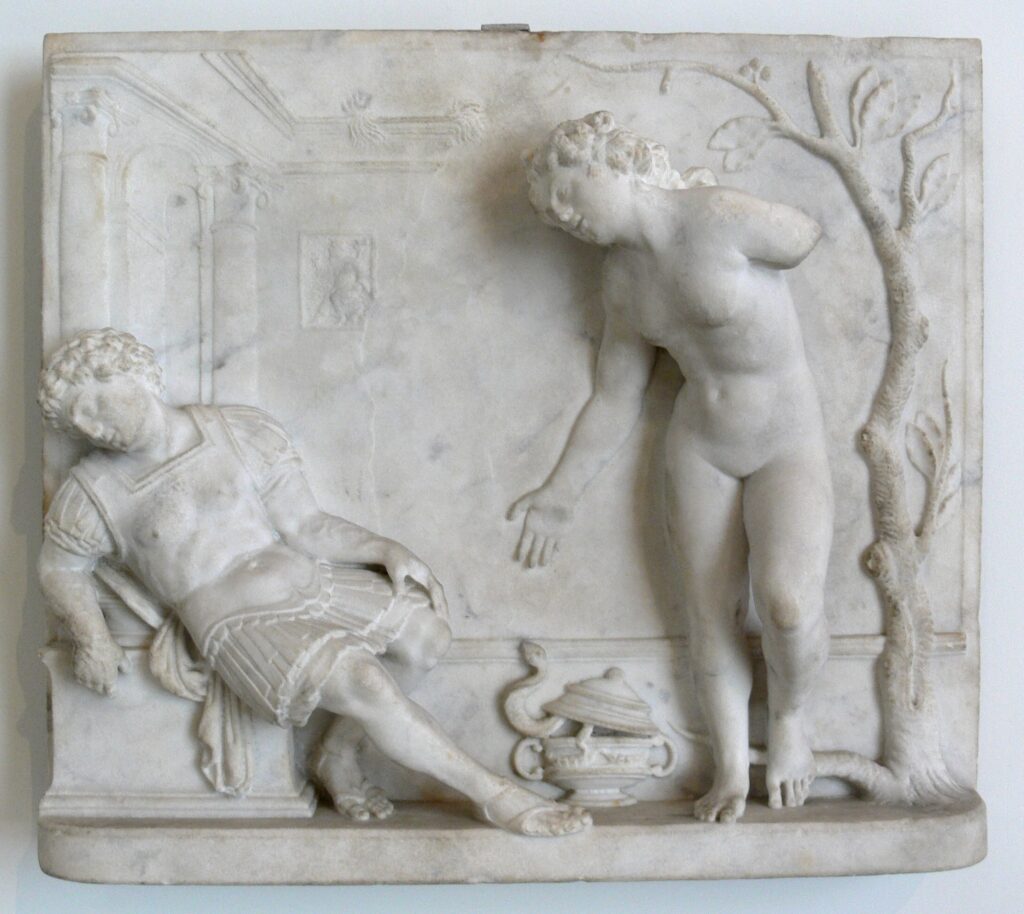
What about Antony’s children with Cleopatra? After Antony’s suicide in Alexandria in August 30 BCE and Cleopatra’s death shortly after, Octavian forced Cleopatra Selene to participate in his Triple Triumph in summer 29 BCE, dressed as the Moon with her twin brother Alexander Helios as the Sun.
But Octavian made a surprising decision. While ensuring Antony’s son by Fulvia climbed the cursus honorum and became consul, and marrying Antony’s daughters by Octavia to suitable Romans, he treated Cleopatra Selene differently. Since she’d been declared Queen of Crete and Cyrenaica by Antony and could technically be considered rightful Queen of Egypt, her situation wasn’t straightforward.
Octavian ultimately married her to King Juba II of Mauretania (modern Algeria and Morocco). She became queen of that Roman client kingdom, ruling alongside her husband and issuing coins that proclaimed her royal status. Through her, Antonian blood continued in North Africa and, some genealogists argue, may have descended through Caucasian rulers into medieval European royal houses.
The broader legacy is more complex. After victory, Octavian became undisputed master of the Roman world. In 27 BCE, he was granted the honorific title Augustus, marking the final transformation of Republic into monarchy. Actium became an important part of imperial propaganda, with poet Virgil devoting some of his finest lines to describing the battle.
Cicero decreed that no one in Antony’s family would ever bear the name Mark Antony again. Antony’s honors were revoked, his statues removed. The damnatio memoriae was thorough—at least officially.
Yet Antony’s influence persisted in unexpected ways. The eastern administrative structures he established—combining Roman governance with local traditions—became templates for later imperial administration. His recognition that Rome needed to accommodate rather than simply dominate eastern cultures influenced how subsequent emperors managed half the empire.
The military lessons from Actium mattered too. Agrippa’s innovations, including the harpax grappling device and tactical emphasis on maneuverability over size, shaped Roman naval doctrine for generations. Antony’s failures became textbook examples of what not to do: don’t fight on unfavorable terrain, don’t let yourself be blockaded, don’t abandon your army.
Most significantly, Antony represented the last serious alternative to monarchy. Had he won, would Rome have developed differently? We can’t know. What we do know is that his defeat removed the final obstacle to one-man rule. Augustus ruled for more than forty years, long enough to make Romans accustomed to empire and forget the violence of his coup.
Conclusion
Stand back and look at the full arc: a debt-ridden youth becomes Caesar’s trusted general, helps avenge his murder, rules half the known world, falls in love with history’s most famous queen, and dies by his own hand in Alexandria. Yet his descendants wear the purple.
Mark Antony’s story matters because it crystallizes a crucial historical moment—the transformation from republic to empire. That transformation required eliminating the Republic’s defenders, which Antony helped accomplish at Philippi. It required concentrating power, which the triumvirate achieved. And it required eliminating anyone who might challenge one-man rule, which Octavian accomplished by destroying Antony.
The propaganda war that destroyed Antony’s reputation offers its own lessons. Cicero and Octavian, two of history’s sharpest political adversaries, gave us the Antony we remember. Their success reminds us that controlling the narrative often matters more than controlling the facts. Every depiction of Antony as besotted fool, every Shakespearean tragedy emphasizing his weakness for Cleopatra, traces back to ancient spin.
But here’s what the propaganda couldn’t erase: Antony was genuinely capable. His leadership at Pharsalus and Philippi won two of history’s most consequential battles. His funeral oration for Caesar changed Roman history in a single afternoon. His decade-long management of Rome’s eastern provinces, for all its controversies, kept that vast region stable and productive.
His failures were equally genuine. He consistently underestimated opponents, from Octavian to Agrippa. He mistook personal charisma for political skill. Most fatally, he failed to recognize that Roman power required Roman legitimacy—that however useful Egyptian wealth might be, Romans would never accept a leader who appeared more pharaoh than consul.
The question “hero or villain” misses the point. Antony was a product of late Republican Rome—an age when military commanders held more power than institutions, when civil war had become routine, when traditional restraints had collapsed. In that context, his choices made sense even if they failed. Partner with the wealthiest kingdom in the Mediterranean? Obviously. Eliminate political rivals? Standard practice. Abandon a losing naval battle? Better than pointless death.
What distinguishes Antony isn’t his virtue or lack thereof—it’s that he lost. History is written by victors, and Augustus had forty years to perfect the narrative. Had Agrippa’s fleet been less maneuverable, had weather favored Antony at Actium, had any of a dozen variables shifted, we might remember Octavian as the upstart who tried and failed to usurp Antony’s rightful position.
The deeper lesson lies in how completely propaganda shaped collective memory. Two thousand years later, we still see Antony largely through Augustan lenses—as the man who chose love over duty, passion over reason, Egypt over Rome. That narrative served Augustus’s purposes perfectly: it justified his victory while absolving Romans of killing another Roman leader.
Understanding Antony means recognizing that complexity. He was brilliant and flawed, capable and naive, loyal and opportunistic. He helped destroy the Republic he claimed to defend. He lost his empire but won a place in legend. His enemies erased his statues but couldn’t prevent his bloodline from wearing the purple.
In the end, Mark Antony remains what he always was: a military genius who proved catastrophically bad at politics, a man of genuine talent destroyed by failures of judgment and perception. Not quite hero, not quite villain—just a complicated human being caught at the hinge of history, whose choices helped determine whether Rome would be republic or empire. His answer, however unintentionally, was empire. And history has been arguing about it ever since.
The Second Triumvirate—Rome’s Last Power-Sharing Deal
The Second Triumvirate was ancient Rome’s final attempt at shared dictatorship, and its collapse directly led to the empire. Here’s how it worked and why it failed.
After Caesar’s assassination in 44 BCE, Rome fell into chaos. To end the fighting, Octavian, Mark Antony, and Marcus Lepidus formed this coalition. Unlike the informal First Triumvirate of Caesar, Pompey, and Crassus, this was legally sanctioned—all three men held imperium and shared dictatorship over Rome, governing territories individually.
They split provinces: Octavian took the West, Antony the East, Lepidus Africa. On paper, it balanced power. In practice, it concentrated violence. They imposed proscriptions—death lists of political enemies whose property was confiscated. Though less bloody than Sulla’s, the two-month campaign traumatized Roman society.
By January 42 BCE, the Senate officially deified Caesar as “The Divine Julius” and confirmed Antony’s position as high priest. This gave Octavian enormous propaganda value as “son of a god.”
The triumvirate’s first success: defeating Brutus and Cassius at Philippi in 42 BCE. But cracks appeared immediately. In 36 BCE, Octavian won over Lepidus’s army, stripping him of all influence except his position as Pontifex Maximus. Two triumvirs remained.
In 37 BCE, when Octavian faced western problems, Antony met him at Tarentum, supplied ships, and agreed to renew the triumvirate for five more years. But by 33 BCE, the triumvirate was formally abandoned. By 31 BCE, civil war erupted between Octavian’s supporters and Antony’s.
The lesson? Power-sharing only works when parties have roughly equal strength and mutual interest in stability. Once Lepidus fell, nothing prevented Octavian and Antony from collision except their own restraint. And neither man had much of that.
The Second Triumvirate’s real legacy was proving that Roman institutions couldn’t contain ambitious individuals with armies. After Actium, Augustus had the answer: don’t pretend to share power. Take it all, but call it something else. He called it “first citizen.” History called it empire.
The Battle That Changed Everything—Actium by the Numbers
September 2, 31 BCE. Two fleets met outside the Gulf of Actium on Greece’s western coast. By day’s end, the Mediterranean’s political future was decided. Here’s what actually happened.
Forces: Antony had roughly 500 ships (though he deployed about 250) and 65,000 infantry. Octavian had 400 ships and 75,000 infantry. Antony’s ships were larger—quinqueremes with towers full of soldiers. Octavian’s were smaller, faster liburnian galleys.
The setup: Antony and Cleopatra were trapped between Octavian’s land forces and Agrippa’s fleet. Hunger was wearing out Antony’s men. They had to break out or starve. Their plan: fight and win if possible, but break through Agrippa’s line and run for Egypt if necessary.
The tactics: Agrippa used the “harpax”—a grappling hook fired from ballistas that latched onto enemy ships. Octavian’s swifter ships would then close in and board, turning naval battle into hand-to-hand combat where Roman legions excelled. Rather than trying to ram bronze-plated quinqueremes, lighter units circled them, covering decks with arrows and ballistae fire.
The battle: Antony’s left wing under Gaius Sosius launched the initial attack. Agrippa commanded Octavian’s left wing, with Lucius Arruntius at center and Marcus Lurius on the right. Antony’s plan was to use his fleet’s strongest section to hit center and break through.
The decision: After hours of fighting, a breach appeared in Octavian’s center. Cleopatra, commanding 60 Egyptian ships held in reserve, immediately moved through the gap into open sea. Antony then broke through and followed her.
The aftermath: Antony’s remaining fleet immediately surrendered. One week later, his land forces surrendered too. Octavian lost fewer than 5,000 men—remarkably low casualties for such a decisive battle.
Why did it matter? Actium didn’t just determine who ruled Rome. It determined what Rome would become. Antony represented eastern-style monarchy openly embraced. Octavian represented Roman tradition with autocracy carefully disguised. His victory meant Rome would have emperors pretending not to be kings rather than kings pretending not to be emperors. Subtle difference, massive consequences.
Sources and References
This article draws on ancient primary sources including Plutarch’s Life of Antony, written roughly a century after the events; Cassius Dio’s Roman History; and Suetonius’s Lives of the Caesars. These must be read critically, as all were composed under the imperial dynasty Octavian founded.
Cicero’s Philippics provide contemporary invective against Antony, valuable for what they reveal about rhetoric and propaganda even if biased. Appian’s Civil Wars offers detailed military accounts. Virgil’s Aeneid depicts Actium as cosmic struggle between order and chaos.
Modern scholarship includes W. W. Tarn’s influential but now-contested defense of Antony, Ronald Syme’s The Roman Revolution examining propaganda’s role in shaping narratives, and Patricia Southern’s comprehensive biography. Eleanor Huzar’s Mark Antony: A Biography remains standard reference.
Recent work by Jeffrey Tatum explores whether Antony genuinely intended republican restoration. Kenneth Scott analyzed the legitimacy of Antony’s seized will. John Crook’s legal analysis questioned whether testamentary provisions were forgeries.
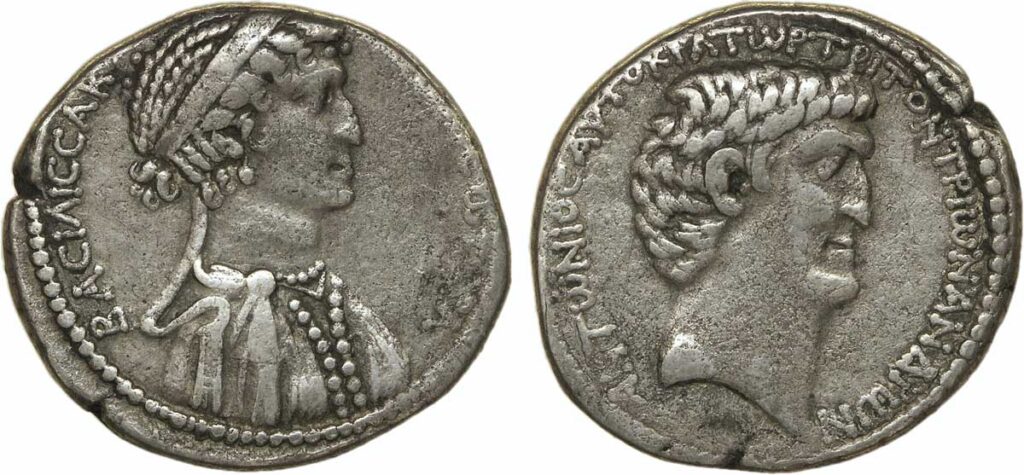
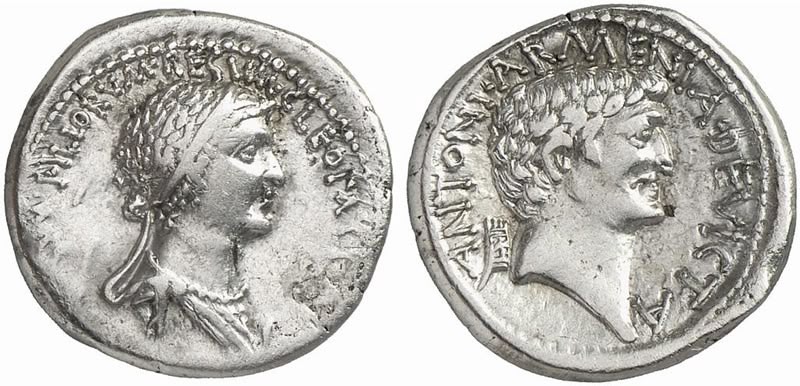
Archaeological evidence from Actium, numismatic records showing how Antony and Cleopatra represented themselves on coins, and inscriptional evidence from eastern provinces all supplement literary sources. The challenge remains separating fact from centuries of accumulated legend—a difficulty Antony would have appreciated, having been both its victim and its perpetrator.