
Ancient Rome’s civil wars were crucial events marked by changing political alliances and significant betrayals. These struggles not only decided who would rule Rome but also transformed its political landscape, eventually leading to the end of the Republic and the rise of imperial rule.
This article delves into the complex nature of these wars by examining:
- The rise and fall of important alliances such as the First and Second Triumvirates.
- How personal connections and political marriages played a role in consolidating power.
- Major betrayals, including Julius Caesar’s assassination, that changed Rome’s course.
- The violent battles for power and lessons learned from earlier conflicts, like the rivalry between Sulla and Marius.
By understanding these factors, we can gain insight into how ambition, loyalty, and betrayal intertwined to shape Rome’s civil wars and its transformation during turbulent times.
The spectacle of ancient Rome, which included gladiators, chariot races, and theater performances, played a crucial role in society. This involvement wasn’t just for fun; it had significant effects on social relationships and political authority.
Furthermore, it’s essential to recognize how the Twelve Tables shaped Roman legal systems, marking a significant milestone in the development of Roman law and legal history.
Lastly, the legacy of ancient Rome continues to shape Western civilization. From its inception as a small city-state to its transformation into a vast empire, Rome’s influence is both profound and enduring. The impact of Roman culture, governance, and innovations can be seen in various aspects of modern society.
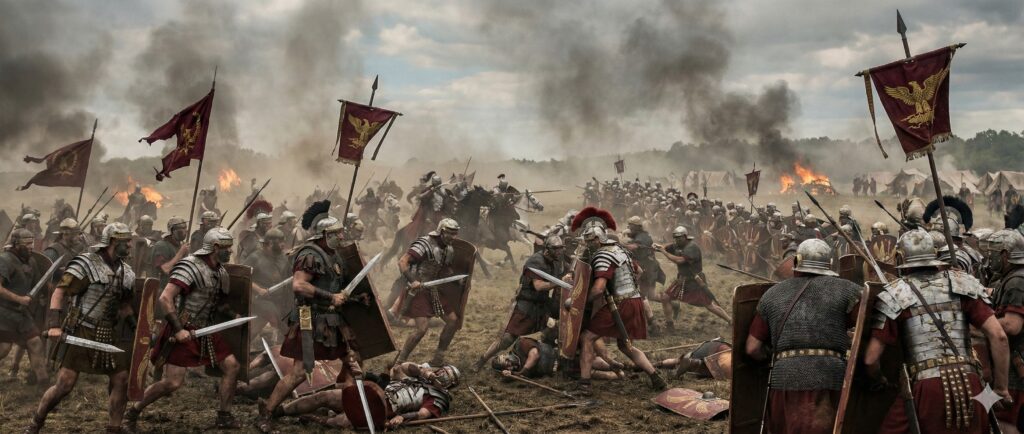
The Role of Political Alliances in Ancient Rome’s Civil Wars
Political alliances played a crucial role in shaping the course and outcomes of the Roman civil wars. These alliances were often fragile arrangements among ambitious leaders seeking to consolidate their power and influence within the Republic’s complex political landscape. The First Triumvirate, formed by Julius Caesar, Pompey, and Crassus, stands out as one of the most significant examples of alliance formation during this turbulent era.
The First Triumvirate: Julius Caesar, Pompey, and Crassus
Formation and Purpose
Around 60 B.C., Julius Caesar, Pompey the Great, and Marcus Licinius Crassus came together in a private political agreement known today as the First Triumvirate. This informal coalition was designed to bypass the traditional senatorial elite and secure dominance over Roman politics. Each member brought unique strengths:
- Caesar sought military command and political advancement.
- Pompey wanted land for his veterans and legitimization of his eastern settlements.
- Crassus aimed to protect his vast wealth and financial interests.
Their alliance enabled them to control elections and legislation through mutual support, effectively sidelining opposition within the Senate.
Securing Political Power
The strength of the First Triumvirate lay in its ability to wield combined influence rather than relying solely on individual achievements. They coordinated efforts to pass laws beneficial to all three members:
- Caesar was appointed governor of Gaul, where he launched campaigns that expanded Rome’s territories.
- Pompey received land allotments for his troops.
- Crassus obtained favorable tax contracts in Asia.
By pooling their resources and political capital, they dominated Rome’s governing institutions despite lacking formal constitutional authority as a group.
Julia’s Marriage as a Political Tool
Julia, Julius Caesar’s daughter, married Pompey in a union that symbolized and reinforced the alliance between these powerful men. This marriage had multiple political functions:
- It created familial bonds that helped maintain trust between Caesar and Pompey.
- It presented a public image of unity among Rome’s leading figures.
- It acted as a deterrent against internal conflict by intertwining personal stakes with political cooperation.
Julia’s role highlights how marriages served as instruments for solidifying alliances beyond formal agreements or military strength.
Collapse of the First Triumvirate
Several factors contributed to the eventual breakdown of this alliance:
- Death of Julia: Her passing removed the personal connection binding Caesar and Pompey, weakening their relationship.
- Death of Crassus: Killed at the Battle of Carrhae in 53 B.C., Crassus’ absence destabilized the balance among the triumvirs.
- Rising Rivalry: Without Crassus acting as mediator, tensions grew between Caesar and Pompey over power distribution.
- Senate Opposition: The Senate increasingly backed Pompey as a counterweight to Caesar’s rising popularity.
These elements led to open conflict when Caesar crossed the Rubicon River in 49 B.C., igniting civil war against Pompey and his supporters.
The First Triumvirate exemplifies how political alliances in Roman civil wars were pragmatic yet precarious arrangements.

The Second Triumvirate: Octavian, Mark Antony, and Lepidus
Political alliances played a crucial role during the Roman civil wars, often formed out of necessity or convenience to consolidate power. The Second Triumvirate was one such alliance, established in 43 BCE by Octavian, Mark Antony, and Lepidus. Unlike the informal First Triumvirate of Julius Caesar, Pompey, and Crassus, this alliance was officially recognized and granted extraordinary powers by the Senate through the Lex Titia. This legal foundation allowed the triumvirs to exercise near-dictatorial authority over Rome.
Goals and Achievements
The primary goal of the Second Triumvirate was to defeat the assassins of Julius Caesar—Brutus and Cassius—who had plunged Rome into chaos after Caesar’s murder in 44 BCE. United by a common enemy, Octavian, Antony, and Lepidus launched a military campaign culminating in the decisive Battle of Philippi in 42 BCE. Their victory eliminated much of the Senate’s opposition and paved the way for their dominance in Roman politics.
Internal Conflicts and Collapse
Despite their initial cooperation, internal conflicts soon emerged within the alliance:
- Lepidus was quickly sidelined due to political missteps and loss of support.
- Rivalry between Octavian and Mark Antony intensified as both sought supreme control over Rome.
- Antony’s relationship with Cleopatra further alienated him from Rome’s elite and gave Octavian ammunition to question his loyalty.
This infighting weakened the triumvirate’s unity and ultimately led to its collapse. The struggle between Octavian and Antony escalated into a civil war that ended with Octavian’s victory at Actium in 31 BCE. The fall of the Second Triumvirate marked a critical turning point—signaling the end of political alliances as balanced powers and ushering in a new era dominated by a single ruler.
Modern Interpretations
Interestingly, while these historical events shaped the future of Rome, they also inspire modern interpretations and explorations in various forms including role-playing games like Second Life. In such immersive experiences, players can step into different roles within historical contexts such as that of ancient Rome, allowing for a unique blend of education and entertainment.
Betrayals and Power Struggles that Shaped the Civil Wars
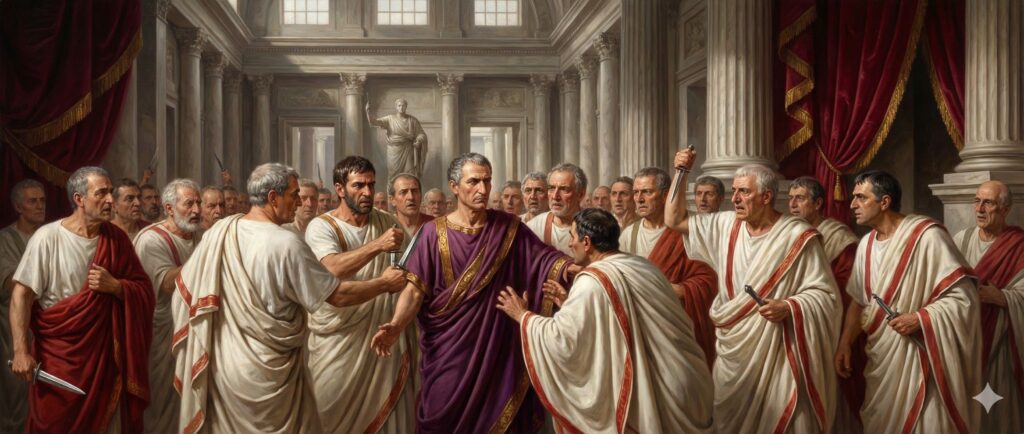
Assassination of Julius Caesar by Brutus and Senate Conspirators
The assassination of Julius Caesar in 44 B.C. remains one of the most dramatic examples of betrayal and power struggles in Roman politics. This event was not a sudden act of violence but the climax of deep-seated fears and political maneuvering among Rome’s elite.
Motivations Behind Caesar’s Assassination
- Fear of monarchy: Caesar’s appointment as dictator for life alarmed many senators who saw it as the death knell for the Republic. His accumulation of power threatened the traditional senatorial authority and the republican system, which had its roots in the birth of the Roman Republic.
- Concerns over personal ambition: Some feared Caesar intended to crown himself king, a role despised since Rome’s foundation. This ambition was perceived as a direct challenge to the Senate and the ideals of Roman liberty.
- Preservation of the Republic: The conspirators justified their actions as necessary to save Rome from tyranny, believing that removing Caesar was the only way to restore balance and prevent dictatorship.
Role of Betrayal by Trusted Senators like Brutus
- Brutus as a symbol of betrayal: Marcus Junius Brutus was not only a senator but also considered a close friend and confidant of Caesar. His participation in the conspiracy shocked Rome because it epitomized personal betrayal within political struggle.
- Senate conspirators’ collusion: More than 60 senators joined Brutus in the plot, showing widespread discontent with Caesar’s rule. Their conspiracy was driven by a blend of ideology, fear, and personal ambition.
- The Ides of March: On March 15, 44 B.C., Caesar was surrounded and stabbed 23 times in the Theatre of Pompey. This act marked a violent rupture in Roman politics, where allies became enemies overnight.
“Et tu, Brute?” — Caesar’s reputed last words highlight the profound betrayal by someone he trusted deeply.
Immediate Consequences for Rome’s Political Landscape
- Political chaos and uncertainty: The assassination did not restore the Republic as intended. Instead, it unleashed a new wave of instability and civil war.
- Rise of the Second Triumvirate: The power vacuum created by Caesar’s death led to the formation of another political alliance between Octavian, Mark Antony, and Lepidus to defeat Caesar’s assassins and consolidate control.
- Public reaction and unrest: Many Romans mourned Caesar’s death, viewing him as a champion of reforms. The betrayal alienated parts of the population, fueling support for his heirs and loyalists.
- Enduring legacy of distrust: The event entrenched a culture of political betrayal and violence that would characterize subsequent Roman conflicts.
This assassination underscored how deep political rivalries and personal betrayals intertwined to shape the trajectory of Roman history. Ambition, fear, and loyalty clashed violently, setting the stage for further struggles that defined Rome’s ultimate transition from Republic to Empire.
Conflict Within the Second Triumvirate Leading to Octavian vs Antony Civil War
The Second Triumvirate was formed as a strong alliance between Octavian, Mark Antony, and Lepidus, with the goal of consolidating power and seeking revenge for Julius Caesar’s assassination. The Senate granted them extraordinary powers, enabling them to dominate Roman politics. However, their ambitions and changing loyalties soon caused this alliance to break apart.
1. Rivalry Between Octavian and Antony
The competition for ultimate control intensified as Octavian, Caesar’s adopted heir, sought to assert his legitimacy. Mark Antony, a seasoned general and politician, grew increasingly independent, particularly through his relationship with Cleopatra VII of Egypt. This alliance was perceived as a betrayal by many Romans, who feared Antony’s loyalty had shifted from Rome to a foreign queen. His association with Cleopatra not only symbolized a political and cultural divide but also provided Octavian with propaganda to question Antony’s patriotism.
2. Betrayals and Power Struggles
The breakdown of trust within the triumvirate highlighted how personal ambitions could override political unity. Lepidus, the weakest member, was eventually sidelined by Octavian, leaving a direct conflict between the latter and Antony. This struggle was marked by betrayals and shifting allegiances among their supporters, destabilizing Roman politics further.
3. The Civil War and Battle of Actium
The rivalry culminated in a decisive naval battle at Actium in 31 B.C., where Octavian’s forces defeated Antony and Cleopatra’s fleet. This victory effectively ended the power struggle and led to Antony and Cleopatra’s suicides. Octavian emerged as the sole ruler, paving the way for the transformation of the Roman Republic into the Roman Empire under his new title, Augustus.
This episode illustrates how alliances, betrayals, and personal ambition influenced Roman history during its most turbulent civil wars.
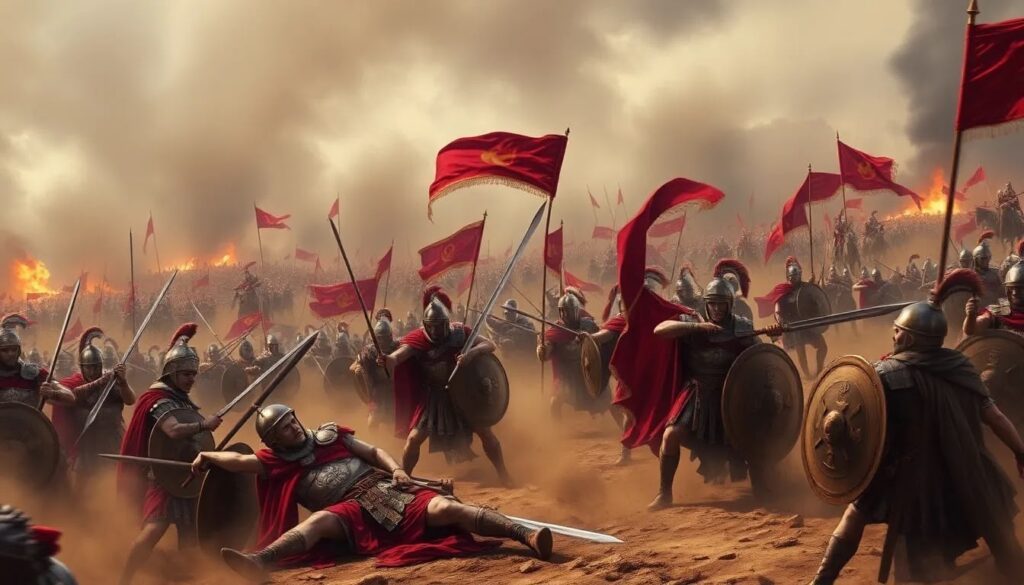
Earlier Civil Wars: Sulla vs Marius and Their Legacy of Betrayal
The rivalry between Lucius Cornelius Sulla and Gaius Marius represents one of the earliest and most significant episodes of political alliances and betrayals in Ancient Rome’s civil wars. This conflict set a grim precedent for the use of military power to resolve political disputes.
1. Background of the Rivalry
Marius and Sulla were prominent Roman generals and politicians who competed fiercely for control over military commands, especially during the Jugurthine War and the Social War. Their struggle reflected deeper tensions within the Republic about authority and the role of the Senate versus popular leaders, a topic well-explored in this article on the structure of power in the Roman Republic.
2. Sulla’s Marches on Rome
Sulla’s decision to march his legions on Rome not once, but twice, shocked the Roman world. His use of military force to seize political power broke longstanding norms and demonstrated that control of armies could override traditional political processes. This was a turning point that normalized civil war as a tool for political gain.
3. Proscriptions and Political Brutality
After securing power, Sulla initiated proscriptions—a systematic campaign of outlawing, confiscating property, and executing enemies without trial. These extreme measures targeted not only political rivals but also anyone perceived as threats, instilling fear and eliminating opposition ruthlessly. This ruthless repression highlighted the violent stakes involved in Roman power struggles.
Sulla’s actions left a lasting legacy in Roman politics. His willingness to betray former allies and use brutal tactics influenced later figures like Julius Caesar and Octavian. The early civil wars between Sulla and Marius foreshadowed the persistent cycle of alliances and betrayals that would continue to shape the fall of the Republic and the rise of the Empire.
Interestingly, these events also occurred during a period when agriculture played a crucial role in Roman economic growth, which significantly influenced social development. Additionally, understanding the ancient Roman religion can provide further insights into how deeply intertwined these religious practices were with every aspect of their lives including politics.
The legacy of these civil wars extends beyond mere political alliances; it set in motion a series of events that culminated in the rise and fall of the Roman Empire, a period marked by diverse cultures, languages, and traditions.
FAQs (Frequently Asked Questions)
What was the significance of political alliances during Ancient Rome’s civil wars?
Political alliances in Ancient Rome’s civil wars were crucial for securing power and influencing the political landscape. Alliances such as the First and Second Triumvirates shaped power dynamics by uniting key figures like Julius Caesar, Pompey, Crassus, Octavian, Mark Antony, and Lepidus to consolidate control and navigate the turbulent period of civil conflict.
How did the First Triumvirate impact Roman politics and what led to its collapse?
The First Triumvirate, formed by Julius Caesar, Pompey, and Crassus, was an informal political alliance that secured significant power for its members through combined influence and strategic moves like Julia’s marriage to Pompey. However, internal rivalries, shifting loyalties, and external pressures eventually caused its breakdown, leading to renewed conflicts.
What role did betrayal play in the assassination of Julius Caesar?
Betrayal was central to Julius Caesar’s assassination. Trusted senators like Brutus feared Caesar’s growing power and ambitions for monarchy. Their betrayal culminated in his assassination, which dramatically altered Rome’s political trajectory by plunging it into further civil wars and power struggles.
How did the Second Triumvirate form and what internal conflicts led to its downfall?
The Second Triumvirate was established by Octavian, Mark Antony, and Lepidus with extraordinary powers granted by the Senate to defeat Caesar’s assassins. Despite initial cooperation in campaigns against their enemies, internal rivalries—especially between Octavian and Antony—arose due to ambition and shifting loyalties, ultimately causing the alliance’s collapse.
What were the key factors behind the civil war between Octavian and Mark Antony?
The rivalry between Octavian (later Augustus) and Mark Antony intensified after Julius Caesar’s assassination. Antony’s alliance with Cleopatra was perceived as a betrayal by Rome, escalating tensions. This conflict culminated in a decisive civil war marked by the Battle of Actium where Octavian emerged victorious, reshaping Roman leadership.
How did earlier civil wars between Sulla and Marius influence later political betrayals in Rome?
The rivalry between Sulla and Marius over military commands set a precedent for violent power struggles in Rome. Sulla’s marches on Rome and use of proscriptions against enemies illustrated brutal political tactics that influenced subsequent civil wars. These events entrenched a legacy of betrayal and forceful seizure of power that characterized later Roman politics.