Pontifex Maximus was a very important title in ancient Rome. It referred to the main high priest who was in charge of the College of Pontiffs. This position held the highest religious authority and had the responsibility of overseeing Rome’s sacred ceremonies, interpreting religious laws, and maintaining the crucial relationship between the gods and the people.
But the role of Pontifex Maximus wasn’t just limited to spiritual matters. It also combined religious authority with political power. This unique combination allowed the person holding this office to have an impact on both religious and civic aspects of Roman life, shaping society in various ways.
This article delves into the origins, development, and lasting influence of the Pontifex Maximus. We will explore how this position started as a purely religious institution but later evolved into a significant political tool during the Republic and Empire eras. Additionally, we will discuss its enduring effect on subsequent models of religious leadership, including its adoption by the papacy.
Understanding the Pontifex Maximus provides valuable insights into how spiritual leadership and political governance were interconnected in ancient Rome.
To fully understand this connection between spiritual leadership and political governance, it’s important to consider the larger context of ancient Roman society. The spectacle of ancient Rome – which included gladiators, chariot races, and theaters – played a crucial role in shaping social relationships and political authority.
Furthermore, the legal system that upheld this intricate society was greatly influenced by The Twelve Tables, a significant milestone in Roman law and legal history.
The legacy of ancient Rome, from its beginnings as a Republic to its transformation into a powerful Empire, continues to shape various aspects of modern society.
By understanding these elements, we can deepen our comprehension of the Pontifex Maximus and gain a broader understanding of ancient Roman culture and its lasting impact on Western civilization.
Origins and Religious Role of the Pontifex Maximus
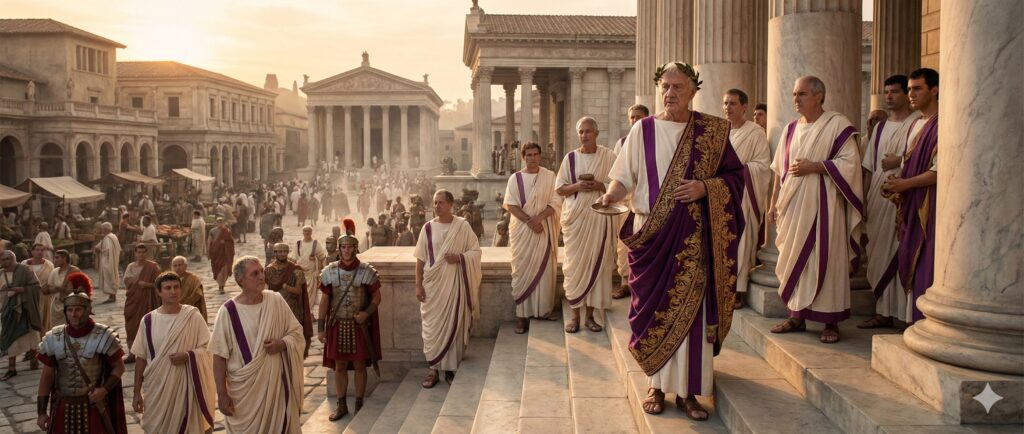
The Pontifex Maximus was established as the chief high priest of the College of Pontiffs, the central priestly body in Roman religion. This office held supreme authority over the religious life of Rome, serving as the primary mediator between the divine and the Roman people.
Initially, the role was exclusive to the patricians, Rome’s aristocratic class, reflecting the early social and political structure of the Republic. Over time, as plebeians gained political rights, they were also allowed to hold the office, marking a significant shift in religious inclusivity and social dynamics.
Key responsibilities of the Pontifex Maximus
- Overseeing state religious practices and rituals: Ensuring that sacrifices, ceremonies, and festivals were performed correctly to maintain divine favor.
- Interpreting religious law: The Pontifex Maximus provided authoritative decisions on fas (religious law), guiding both public officials and citizens on proper conduct. This aspect of his role highlights how Roman Law has played a crucial role in shaping modern legal systems, originating from ancient Rome.
- Regulating the Roman calendar: The office controlled the fasti, the official calendar of religious festivals and public holidays, essential for scheduling civic and religious activities.
- Consecrating temples: The dedication and maintenance of sacred spaces fell under the Pontifex Maximus’s jurisdiction.
- Maintaining public morals: Acting as a guardian of mos maiorum (ancestral customs), the Pontifex Maximus helped uphold societal values linked to piety and respect for the gods.
This position embodied Rome’s vision of linking divine will with civic order. The title itself, often interpreted as “greatest bridge-builder,” symbolized the crucial role of connecting human and divine realms. By managing rituals and laws that regulated this relationship, such as those found in the Corpus Juris Civilis, which served as a comprehensive codification preserving ancient Roman legal principles, the Pontifex Maximus ensured not only religious harmony but also social stability across the Republic.
The role also extended beyond mere religious duties; it was deeply intertwined with the daily life in ancient Rome, influencing politics, culture, and social structures. Today, this historical context can even be explored through immersive experiences in role-playing games like Second Life, where enthusiasts like JP Farmer delve into the world of Romanum, bringing aspects of this rich history to life.
Political Evolution of the Pontifex Maximus Office
The office of Pontifex Maximus underwent significant politicization during the late Roman Republic. Originally a purely religious position, it evolved into a powerful political tool as Rome’s political landscape became more complex and competitive. The Pontifex Maximus was no longer just the chief high priest responsible for religious rites; the role increasingly influenced civic life and governance.
Key elements in this political evolution include:
- Political Influence in the Late Republic: The office became a coveted position among ambitious politicians. Holding the title gave individuals considerable influence over Rome’s religious institutions and public opinion, which could be leveraged to gain political advantage.
- Julius Caesar’s Expansion of Power: Caesar exemplified the fusion of religious and political authority. When he assumed the role of Pontifex Maximus in 63 BCE, he used it to consolidate power beyond military conquests and political offices. His tenure marked an expansion of the office’s influence into the realm of statecraft.
- Religious Imagery on Coins: Caesar and his successors used coins as propaganda tools, prominently featuring religious symbols and references to the Pontifex Maximus title. This reinforced their divine sanction and legitimacy in the eyes of the populace.
- Blending Religious and Military Leadership: The role’s evolution reflected the broader Roman practice of combining military command with religious authority. As Pontifex Maximus, leaders like Caesar symbolized the unity of spiritual guidance and military prowess, a potent mix for controlling both the state and its army. The Roman Army played a crucial role in this dynamic, shaping an empire through its structure, strategies, and operational effectiveness.
This political transformation of the Pontifex Maximus office set a precedent for future Roman rulers, where religious authority became inseparable from political power. The legacy of this intertwining can even be seen in modern culture, where elements of Roman mythology continue to resonate today.
The Role of Pontifex Maximus in the Roman Empire
The position of Pontifex Maximus underwent significant changes with the rise of the Roman emperors. Initially, this title represented a religious role separate from political authority. However, starting with Augustus, emperors began to officially adopt this title, signifying a crucial shift in the merging of religious power and political influence during the imperial era.
How Emperors Incorporated This Role into Their Rule
- Emperors took on the responsibilities of Pontifex Maximus as part of their larger effort to consolidate power.
- This integration enabled them to exert control over both the spiritual and civic aspects of Rome, reinforcing their position as supreme rulers.
- The office became an institutional mechanism to legitimize imperial rule through divine approval.
Continuity and Changes in Religious and Political Functions
- The religious duties of overseeing rituals, festivals, and the Roman calendar continued under the emperor’s supervision.
- However, the political dimension expanded as the Pontifex Maximus now embodied the unity of the empire’s spiritual and political leadership.
- While the College of Pontiffs persisted, its autonomy diminished as emperors centralized authority.
- Religious symbolism remained crucial, but it increasingly served imperial propaganda.
Decline or Transformation in Late Antiquity
- By Late Antiquity, the direct connection between the emperor and the Pontifex Maximus role began to weaken.
- The rise of Christianity changed Rome’s religious landscape, diminishing the traditional Roman religious institutions.
- The office either declined in importance or was transformed to fit the evolving religious-political environment.
- Despite these changes, the legacy of combining supreme religious and political authority through the Pontifex Maximus persisted as a model.
The Pontifex Maximus under the Roman Empire thus illustrates how an ancient religious office adapted to serve imperial ambitions, blending spiritual leadership with autocratic governance in a way unprecedented in Roman history. This transformation also paralleled significant changes in other areas such as Roman architecture, which reflected their power and cultural identity. Furthermore, agriculture played a crucial role in Rome’s economic growth during this period. Additionally, it is essential to consider how Stoicism, a philosophical school that gained popularity in Roman culture, influenced thoughts and actions throughout the empire. Lastly, understanding the legal status of women during this time reveals much about gender dynamics and societal structure in ancient Rome.
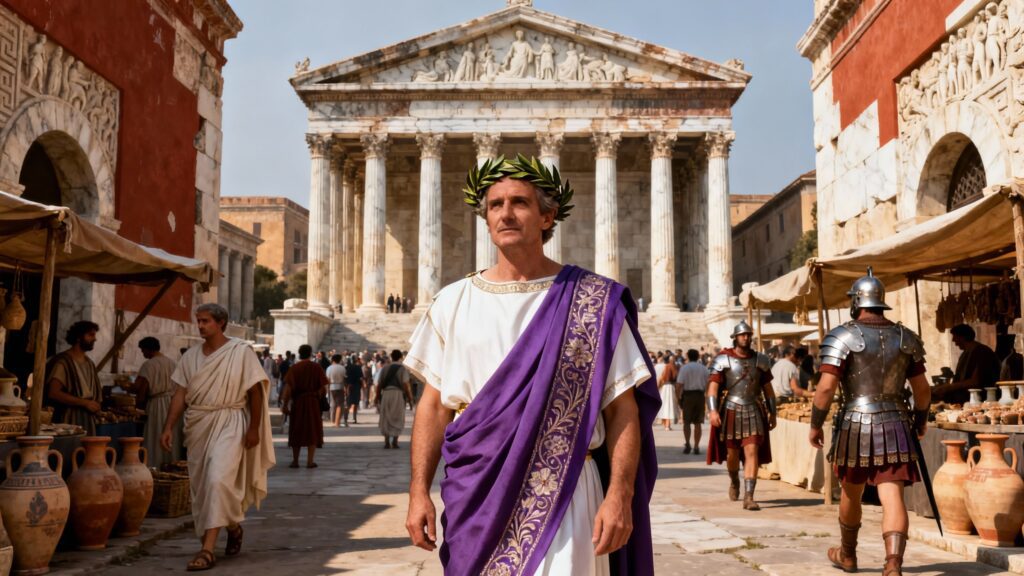
Legacy and Influence on Later Religious Authority
The title Pontifex Maximus found renewed significance within the Catholic Church, where it was adopted as a papal title. This appropriation by the pope as chief bishop serves as a direct link to the ancient Roman tradition, symbolizing an inherited authority that bridges the spiritual and civic realms. The pope’s use of the title reflects more than ceremonial homage; it embodies a conscious continuation of the role once held by Roman pontiffs, now redefined within a Christian framework.
This continuity highlights a complex historical relationship between Roman religious authority and Christian leadership. The early Church, emerging within the Roman world, absorbed many institutional and symbolic elements from Roman governance and religion. By adopting “Pontifex Maximus,” the papacy underscored its claim to supreme religious authority while simultaneously asserting influence over temporal matters, a fusion rooted deeply in Roman precedent.
Understanding this adoption reveals how spiritual and political leadership often intertwined in Western history:
- The pontifical role evolved from overseeing religious rites to encompassing governance functions.
- The papacy inherited not only religious responsibilities but also political influence, shaping the governance of Christian societies.
- This blending of roles influenced the development of European monarchy and the concept of divine right.
The adoption of Pontifex Maximus by the pope illustrates the enduring legacy of ancient Rome’s model of combined spiritual and political power. It also offers insight into how institutions adapt and transform symbols to legitimize authority across different historical contexts.
To grasp the full extent of this influence, one must consider key figures in Roman history like Scipio Africanus, whose military strategies not only changed the course of wars but also established Rome’s dominance in various regions. The infrastructure that supported such expansion, including Roman roads, played a crucial role in maintaining and expanding the empire.
Moreover, understanding the lives of plebeians, who formed the backbone of Roman society, provides valuable insights into its social dynamics. Their experiences significantly influenced the development of political and economic structures in Rome.
Finally, recognizing the incredible engineering feats achieved by Romans further illustrates how their techniques have had a lasting impact on contemporary infrastructure systems. All these elements combined with the birth of the Roman Republic, which marked a critical shift from monarchical rule to a republican system, provide a comprehensive understanding of how ancient Rome’s governance model continues to influence modern political structures.
Conclusion
The significance of the Pontifex Maximus lies in its unique combination of religious and political authority, setting a precedent for institutions that blend spiritual and temporal leadership. This role exemplified a religious-political power balance crucial to ancient Rome’s governance and social cohesion.
Key takeaways include:
- The office served as a bridge between the divine and the state, reinforcing the legitimacy of rulers through sacred authority.
- Its transformation from exclusive priesthood to an imperial title illustrates how religious roles can be adapted to consolidate political power.
- The adoption of the title by the papacy highlights its enduring influence on Western conceptions of leadership combining faith and governance.
Understanding Religious Authority and Political Power: The Pontifex Maximus sheds light on how spiritual legitimacy has historically underpinned political structures. This legacy continues to inform modern discussions on the intersection of church and state, authority, and governance.
Moreover, it’s essential to recognize the broader societal context in which this role existed. For instance, the art and culture in ancient Rome, heavily influenced by earlier Greek and Etruscan traditions, played a significant role in shaping the societal norms and values that supported this religious-political power balance. From stunning sculptures to intricate mosaics, Ancient Roman art serves as a testament to the ingenuity and creativity of this civilization.
Additionally, understanding the socio-economic structure of ancient Rome provides further insight into this topic. The patricians, who were wealthy landowners distinct from the working-class plebeians, held significant power and influence in Roman society. They were essentially masters of Roman luxury and power, which further reinforced the intertwining of religious authority with political power during that era.
FAQs (Frequently Asked Questions)
What was the role and significance of the Pontifex Maximus in ancient Rome?
The Pontifex Maximus was the chief high priest in ancient Rome, holding paramount religious authority. This office combined both religious leadership and political power, overseeing state religious practices, interpreting religious law, regulating the Roman calendar, and maintaining public morals and the relationship between gods and people.
How did the origins of the Pontifex Maximus reflect social dynamics in ancient Rome?
Initially, the office of Pontifex Maximus was exclusively held by patricians, reflecting the aristocratic control over religious authority. Over time, plebeians were included, indicating a shift towards broader social inclusion within Roman religious institutions.
In what ways did the political role of the Pontifex Maximus evolve during the Roman Republic?
During the late Roman Republic, the Pontifex Maximus transitioned from a purely religious figure to a politically influential role. Figures like Julius Caesar expanded its power by using religious imagery on coins to assert authority and blending religious duties with military leadership, making it a tool for political influence.
How was the office of Pontifex Maximus integrated into imperial governance under the Roman Empire?
Roman emperors adopted the title Pontifex Maximus, integrating its religious authority into imperial governance. While maintaining continuity in its functions, the role evolved during the empire to reflect changes in political and religious structures, eventually transforming or declining in Late Antiquity.
What is the legacy of the Pontifex Maximus in later religious institutions?
The title Pontifex Maximus was adopted by the pope as chief bishop in the Catholic Church, symbolizing historical continuity linking Roman religious authority with Christian leadership. This reflects how spiritual and political leadership fused in Western history through enduring institutional legacies.
Why is understanding the Pontifex Maximus important for studying the balance of religious and political power?
Studying the Pontifex Maximus provides insight into how ancient Rome balanced spiritual authority with temporal power. Its enduring legacy influences later institutions that combine spiritual and political leadership, highlighting the complex interplay between religion and politics throughout history.