
The Praetorian Guard started as an elite unit tasked with protecting the Roman emperor. Established during the early days of Imperial Rome, their initial purpose was straightforward: ensure the safety of the emperor in a highly unstable political environment. Over time, their role evolved dramatically, turning them into key players in imperial politics rather than just bodyguards.
This transformation from personal protectors to powerful kingmakers shaped the trajectory of Roman history. The Praetorian Guard’s influence extended far beyond military duties — they became decisive actors in choosing emperors, orchestrating coups, and even auctioning off imperial power. Their rise to political prominence offers a striking example of how military forces can impact governance and succession in ancient Rome.
To fully understand this profound effect on Roman imperial politics, it’s essential to grasp the complexities of how the Roman Republic was governed and the significant transitions that occurred during its existence. Moreover, understanding the broader context of Roman history, including key figures such as Scipio Africanus and his role in shaping historical events, can provide valuable insights.
Additionally, exploring aspects like ancient Roman religion, which intertwined with every aspect of their lives including politics and culture, or examining the legal status of Roman women, which reflects a complex interplay of rights and restrictions that significantly influenced gender dynamics in ancient Rome, can further enrich our understanding.
Finally, one cannot overlook the influence of philosophy on Roman thought. The rise of Stoicism, which emphasized living in harmony with nature and using reason as paths to achieving human flourishing, became popular in Roman culture and influenced important thinkers throughout the empire.
The Origins and Establishment of the Praetorian Guard
The Praetorian Guard was formed by Emperor Augustus as an elite unit within the Roman Imperial army. This formation marked a strategic move to create a dedicated force tasked with protecting the emperor personally, a necessity in Rome’s unstable political climate following decades of civil war. Augustus understood that safeguarding the ruler was essential not just for personal security but also for the stability of his regime.
Formation of the Guard
The initial makeup of the Guard drew heavily from soldiers loyal to two powerful figures of the late Republic: Julius Caesar and Mark Antony. These troops had already demonstrated their allegiance to the emerging imperial order, making them ideal candidates for this specialized unit. Their loyalty was crucial given the recent power struggles that shaped Rome’s transition from republic to empire.
Core Mission
The core mission of the Praetorian Guard at inception was clear:
- Serve as personal bodyguards for the emperor.
- Provide a reliable military presence close to the seat of power.
- Protect against assassinations and palace coups in a political landscape rife with intrigue and danger.
Influence Beyond Protection
By creating this elite force, Augustus not only ensured his own security but also established a new institution that would evolve significantly beyond its original protective role. The influence of such military formations can still be seen today, even in role-playing games like Second Life, where enthusiasts like JP Farmer immerse themselves in historical contexts such as that of Ancient Rome.
Moreover, while the Praetorian Guard was primarily focused on protection, it also played a part in maintaining order which is closely related to the principles of Roman Law. This legal framework has had a lasting impact on modern legal systems, as seen in [the enduring influence of the Corpus Juris Civilis](https://www.menofpompeii.com/the-enduring-influence-of-the-corpus-juris-civilis-on-modern-law-on contemporary society).
In addition to these aspects, it is important to note that the Roman Empire was not just about military might or legal frameworks; it was also about architectural innovation and cultural identity. The structures built during this period were not merely functional; they served as a testament to Rome’s power and cultural identity.
Expanding Roles: Beyond Protection to Political Influence
The responsibilities of the Praetorian Guard went far beyond their original job as bodyguards for the emperor. They became an essential tool for the emperor to maintain control over Rome by taking on several additional roles:
1. Secret police and military intelligence
The Guard kept a close watch on people, gathered information about potential threats, and quietly silenced any opposition. Being based in Rome allowed them to keep an eye on political enemies and conspirators, acting as the emperor’s spies in a city full of secrets.
2. Exclusive right to bear arms within Rome’s sacred boundaries
Unlike regular soldiers, the Praetorians were the only armed group allowed inside the pomerium, which was the sacred boundary of Rome. This special privilege gave them complete control over military power in the capital, giving them more influence over both civilian and political matters.
3. Castra Praetoria – their fortified headquarters
Just outside Rome, they built a stronghold called Castra Praetoria. This camp represented their growing power. It wasn’t just a place to sleep; it was a strategic base that allowed them to quickly move around the city and maintain control over its streets and important political areas.
Their changing roles made the Praetorian Guard not only protectors but also enforcers of imperial authority, setting the stage for them to eventually become powerful figures in Roman politics.
This shift in power dynamics also happened alongside significant changes in other parts of Roman society. For example, agriculture during the Roman Republic and Empire played a crucial role in driving economic and social development. It was more than just producing food; it influenced many aspects of life in Rome.
Additionally, while the Praetorian Guard had an important role in keeping order and enforcing imperial rule, they weren’t the only ones shaping ancient Rome’s social and political landscape. The plebeians, who were the common people of ancient Rome, were essential to Roman society. They made up the majority and had a significant impact on how political and economic structures developed.
Moreover, Roman engineering achievements also played a vital role in shaping the empire. Their ability to connect distant regions ensured effective governance and cultural exchange, leaving a lasting influence on future generations.
As we explore this captivating period further, it’s important to examine different aspects of ancient Rome’s history which is not just about conquering and expanding; it is also a story of creativity, culture, and governance that has made an everlasting impact on our world.

From Guardians to Kingmakers: The Praetorian Guard’s Political Ascendancy
The Praetorian Guard’s evolution from imperial bodyguards to decisive political actors marked a significant power shift within Roman imperial politics. Initially charged with protecting the emperor, they gradually inserted themselves into the very heart of governance. Their proximity to the emperor and control over Rome’s security gave them unparalleled leverage to influence imperial succession.
Key factors in their rise as kingmakers included:
- Direct involvement in succession crises: The Guard often played the role of kingmaker by endorsing or opposing claimants to the throne. Their backing could legitimize an emperor or catalyze his downfall.
- Political interventions: They assassinated emperors deemed unfit or threatening, such as Caligula and Commodus, showing their willingness to exercise lethal power.
- Control over imperial access: By controlling who could approach the emperor, they effectively controlled the flow of information and political influence within the palace.
Their transformation signals how the Praetorian Guard became kingmakers in Imperial Rome, shifting from passive defenders to active participants in power struggles. This role made them indispensable yet dangerous, able to determine the fate of emperors through support or opposition. Their influence blurred the lines between military force and political authority, embedding them deeply into the machinery of imperial rule.
However, this complex political landscape was not solely defined by the Praetorian Guard. It also saw the emergence of other influential figures and entities, such as gladiators, who were brave warriors admired for their skills in battle but also victims of a complex social system. This duality made them a fascinating topic in Roman society.
Moreover, understanding the transition from monarchy to a republican system is essential for grasping the complexities of Roman governance. The overthrow of Tarquin the Proud, the last king of Rome around 509 BCE, marked a critical shift that represents a pivotal moment in history. This event known as the birth of the Roman Republic had enduring impacts on modern political structures and continues to be relevant in discussions about governance and power dynamics today.
The Year of the Four Emperors: A Turning Point for Praetorian Power
The Year of the Four Emperors 69 CE stands out as a pivotal moment when the Praetorian Guard’s political influence reached new heights. Following Nero’s suicide in 68 CE, Rome plunged into chaos with four different men—Galba, Otho, Vitellius, and Vespasian—claiming the imperial throne within a single year. The Praetorians played a decisive role by frequently switching their allegiance between these contenders, often determining who would rise or fall.
The Shifting Loyalties of the Praetorian Guard
- Support for Galba initially marked their first major political move, but dissatisfaction with his leadership led them to assassinate him.
- Quickly, they shifted loyalty to Otho, who promised better rewards and policies favorable to the Guard.
- However, Otho’s reign was short-lived; after defeat by Vitellius’s forces, the Guard aligned with Vitellius, highlighting their pragmatic approach to securing power and benefits.
- When Vespasian’s legions marched on Rome, the Praetorians realigned once more, allowing Vespasian to consolidate control.
This volatile pattern of allegiance switching exposed the Guard as kingmakers capable of making or breaking emperors based on self-interest and immediate gain. Their actions during this tumultuous year underscored how military loyalty within Rome’s walls could decisively influence imperial succession, demonstrating that emperors were only as secure as the Praetorians’ support.
Artistic Expressions and Cultural Influence
This period of instability also coincided with a significant transformation in Art and Culture in Ancient Rome, marked by remarkable artistic expressions heavily influenced by earlier Greek and Etruscan traditions.
The Influence of Patricians
Furthermore, it was a time when the Patricians, the wealthy and powerful elite distinct from the working-class plebeians, wielded immense influence over Roman luxury and power.
Auctioning the Empire: The Case of Didius Julianus
The death of Emperor Pertinax in 193 CE marked a low point in the Praetorian Guard’s political conduct. After assassinating Pertinax, the Guard shocked Rome and history by essentially auctioning the imperial throne to the highest bidder. This event, known as the auctioning of the empire, remains one of the most infamous examples of their unchecked power.
Key elements of this episode:
- Pertinax death 193 CE: Pertinax’s attempts to reform and discipline the Guard alienated them. His assassination was a direct result of this tension, illustrating how the Praetorians could remove an emperor who displeased them.
- Bidding for power: Following Pertinax’s murder, the Praetorian Guard announced that they would sell the imperial title to whoever offered the largest donative (bribe). Senators and wealthy individuals vied for their favor.
- Didius Julianus’ purchase: Didius Julianus outbid others by promising each soldier a substantial bonus. His brief reign began not through traditional succession or merit but by purchasing power from a corrupt military force.
- Symbolism of corruption: This auction symbolized how far the Praetorian Guard had strayed from their original role as protectors. They became kingmakers in the crudest sense—selling leadership like merchandise, reducing imperial authority to a transaction.
The consequences were immediate. The auction provoked outrage across Rome and the provinces, undermining Julianus’ legitimacy and sparking civil war. The act exposed the dangers of militarized political influence unchecked by law or loyalty.
This period is a stark reminder of how fragile power can be when it is not rooted in respect or authority. It also illustrates how the rise and fall of such empires can be influenced by internal strife and corruption. The Roman Empire, once a mighty entity with well-maintained roads that served as its backbone, faced significant challenges during this tumultuous time. For more insights into this fascinating historical period, you can explore Men of Pompeii, your ultimate online resource dedicated to understanding Ancient Rome’s rich history.
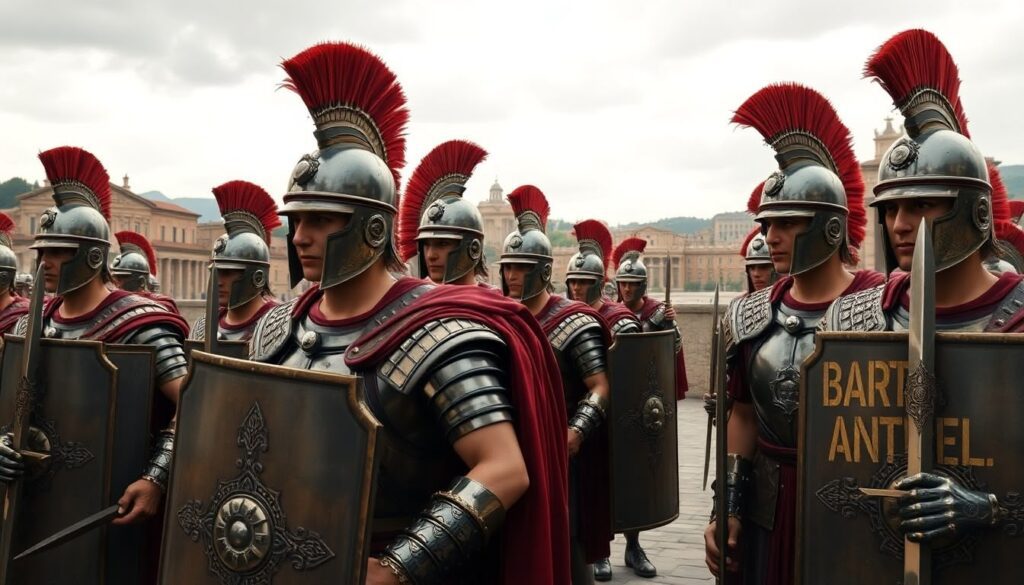
Attempts to Curb Their Power and Disbandment
The immense power of the Praetorian Guard, as detailed in How the Praetorian Guard Became Kingmakers in Imperial Rome, provoked repeated attempts by emperors to rein in their influence. These efforts often involved:
- Creation of rival forces: Emperors introduced new military units such as the Urban Cohorts, designed to act as a counterbalance to the Guard’s authority within Rome. Unlike the Praetorians, the Urban Cohorts focused on maintaining public order and preventing the Guard from monopolizing armed force inside the city.
- Reduction in numbers: Several rulers attempted to shrink the size of the Praetorian Guard to limit their capacity for political interference. Smaller numbers meant less opportunity for the Guard to act as kingmakers or to stage coups.
- Challenges in control: Despite these measures, controlling the Guard proved difficult. Their longstanding privileges, better pay, and proximity to imperial power made them a persistent threat. Attempts at reform were often undermined by the Guard’s entrenched position and ability to manipulate imperial succession.
The Guard’s final chapter unfolded under Emperor Constantine after his victory at the Battle of Milvian Bridge in 312 CE. Constantine disbanded the Praetorian Guard, replacing them with military units personally loyal to him. This decisive move ended the Praetorian era and marked a significant shift in how military power was managed within the empire.
The Lasting Legacy of the Praetorian Guard as Kingmakers
The legacy of the Praetorian Guard reveals critical insights into the dynamics of political power in Rome. Their evolution from imperial bodyguards to kingmakers set a precedent for military influence over governance in ancient Rome. Key impacts include:
- Shaping succession: The Guard’s role in making and unmaking emperors demonstrated how armed forces could directly determine political legitimacy.
- Political instability: Their interventions often intensified power struggles, highlighting risks when military units hold unchecked authority.
- Imperial control challenges: Attempts by emperors to restrain the Guard reflect ongoing tensions between rulers and their protectors.
- Historical lessons: The Praetorian experience underscores how elite military units can become pivotal political actors, influencing state affairs beyond traditional military functions.
Understanding how the Praetorian Guard became kingmakers in Imperial Rome offers valuable perspective on the complex relationship between military power and political authority—an enduring theme not only in Roman history but in broader studies of governance and control.
The Role of Spectacle in Ancient Rome
The spectacle of ancient Rome, which included events like gladiatorial games and chariot races, played a significant role in shaping social relationships and political authority during this period. This entertainment wasn’t just for fun; it had significant effects on social relationships and political authority.
The Significance of the Twelve Tables
Moreover, the Twelve Tables, created between 451-450 BCE, marked a significant milestone in the development of Roman law and legal history. These laws were the first attempt to codify the complex and often arbitrary legal practices of ancient Rome.
The Enduring Legacy of Ancient Rome
The legacy of Ancient Rome is profound and enduring, shaping various aspects of modern society as highlighted in this article about its impact on Western civilization. Daily life during this time was vastly different for various social classes, especially the patricians and plebeians, as explored in this piece on the social class divide.
The Influence of Roman Mythology
Finally, it’s interesting to note that Roman mythology has also had a lasting influence on modern culture. This influence reflects how deeply ingrained these historical narratives are within our societal norms and political aspirations today.
FAQs (Frequently Asked Questions)
What was the original role of the Praetorian Guard in Imperial Rome?
The Praetorian Guard was originally established by Emperor Augustus as an elite unit of the Roman Imperial army, serving as personal bodyguards for the emperor to ensure his safety in a volatile political environment.
How did the Praetorian Guard expand their roles beyond protection?
Beyond their protective duties, the Praetorian Guard took on roles as secret police and military intelligence operatives, gained the exclusive right to bear arms within Rome’s sacred boundaries, and established their fortified headquarters, Castra Praetoria, symbolizing their growing influence.
In what ways did the Praetorian Guard become kingmakers in Roman imperial politics?
The Praetorian Guard transitioned from guardians of the emperor to active political players by involving themselves in succession crises and power struggles, where their support or opposition could determine the fate of emperors, thus becoming powerful kingmakers in Imperial Rome.
What was the significance of the Praetorian Guard during the Year of the Four Emperors (69 CE)?
During this chaotic period when multiple claimants vied for power, the Praetorian Guard’s shifting allegiances allowed them to determine imperial outcomes, highlighting their critical role and political ascendancy in Roman history.
How did the Praetorian Guard’s auctioning of the empire to Didius Julianus reflect their political power?
After the assassination of Emperor Pertinax in 193 CE, the Praetorian Guard notoriously sold the empire to Didius Julianus in an auction, symbolizing their ultimate political dominance and corruption within Imperial Rome.
What efforts were made to curb the power of the Praetorian Guard, and what was their eventual fate?
Some emperors attempted to limit Praetorian influence by creating rival forces like the Urban Cohorts and reducing their numbers. Ultimately, Emperor Constantine dissolved the Praetorian Guard after his victory in 312 CE, replacing them with other loyal military units.