The phenomenon of soldier-emperors in Roman history marks a dramatic shift in how power was seized and maintained within the empire. From Maximinus Thrax to Diocletian, this period captures a transformation driven by military might rather than traditional senatorial or hereditary succession. These rulers emerged directly from the ranks of the army, reflecting changing dynamics in imperial authority.
This era is crucial for understanding the rise and fall of the Roman Empire, as it spans the turbulent Crisis of the Third Century—a time marked by political instability, economic decline, and external threats. The soldier-emperors shaped responses to these challenges, often through force and reform. Their reigns highlight both the fragility and resilience of Roman imperial structures during one of its most volatile chapters.
Exploring this timeline reveals how military leadership influenced governance, setting the stage for profound institutional changes that culminated in Diocletian’s transformative rule. This transformation echoes earlier military triumphs such as those achieved by figures like Scipio Africanus, whose victories established Rome’s dominance over Carthage during the Second Punic War.
Furthermore, understanding this period also involves examining social dynamics, such as the legal status of Roman women, which were intricately linked to their relationships with men in a patriarchal society. Additionally, exploring the influence of Roman mythology on modern culture provides insight into how deeply rooted these ancient narratives are in contemporary society.
The Rise of Soldier-Emperors: Maximinus Thrax’s Ascendancy
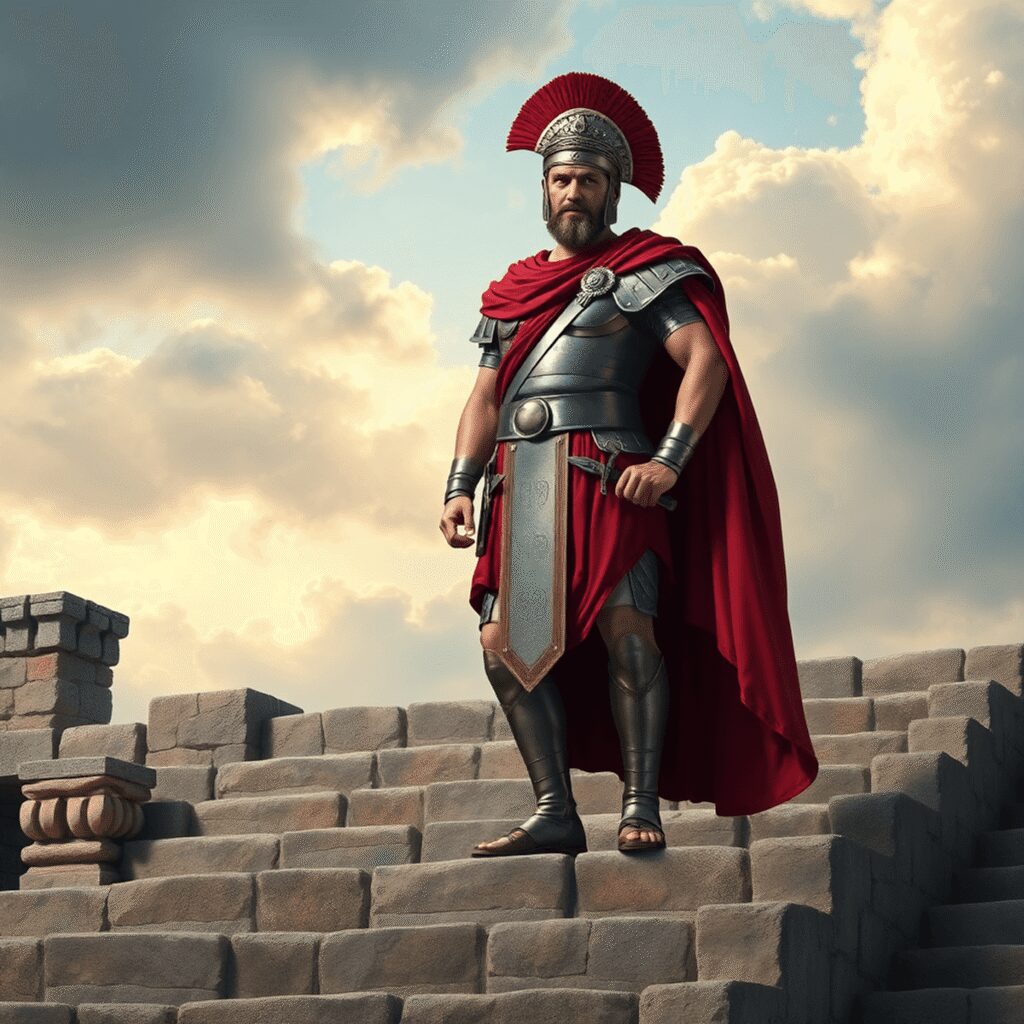
Maximinus Thrax stands out as the first example of a soldier-emperor, a figure whose origins were far from the traditional Roman elite. Born in the provinces, likely in Moesia, his Thracian background marked him as an outsider to Rome’s aristocratic circles. This humble beginning contrasted sharply with earlier emperors who often came from established senatorial families. Maximinus’s physical stature and remarkable strength became legendary, reflecting his soldierly nature and appeal to the military.
His military rise was steady and significant. Starting as a common soldier, he advanced through the ranks due to his leadership skills and battlefield prowess. By the reign of Severus Alexander, Maximinus commanded the Roman legions stationed on the Rhine frontier, a crucial region facing constant pressure from Germanic tribes. His role here was vital for the empire’s defense, earning him respect and loyalty from the troops.
The defining moment in Maximinus’s career came after the assassination of Severus Alexander in 235 CE. The imperial succession shifted dramatically when his own soldiers proclaimed him emperor. This event broke from the established political tradition where emperors were typically chosen by the Senate or inherited power through dynastic ties. The army’s direct role in elevating Maximinus signaled a new era dominated by military influence over imperial authority.
This soldier-emperor origin marked a turning point in Roman history. Maximinus Thrax’s rise embodied the growing power of the legions and set a precedent for future emperors whose legitimacy depended heavily on military support rather than senatorial approval or noble lineage.
Maximinus Thrax’s Reign: Military Campaigns and Governance Challenges
Maximinus Thrax’s reign was marked by constant military campaigns along the empire’s northern borders. The Germanic tribes, especially the Alemanni, posed ongoing threats. Maximinus earned the honorary title Germanicus Maximus for his efforts in repelling these barbarian invasions. His military focus aimed to secure Rome’s borders during a time when external pressures were increasing.
Economic Policies and Their Impact
Economic policies under Maximinus reflected the heavy cost of continuous warfare. He doubled soldiers’ pay to maintain army loyalty, an unprecedented move that strained the imperial treasury. To finance these expenses, he imposed heavy taxes on the population, which deepened social unrest among civilians and provincial elites alike. This fiscal pressure particularly affected the plebeians, the common people of ancient Rome who were already struggling under the weight of existing economic burdens.
Political Opposition and Revolts
Political opposition quickly emerged from the Senate and several provincial governors who viewed Maximinus as an illegitimate ruler and a threat to traditional aristocratic power. This resistance culminated in revolts such as those led by Gordian I and Gordian II in Africa. Their short-lived rebellion underscored the fragility of Maximinus’s authority beyond the military.
Harsh Governance and Religious Persecution
His governance style was marked by harshness and intolerance, intensifying instability within the empire. Notably, Maximinus initiated persecutions against Christians, exacerbating tensions with religious communities already under strain. This repressive approach alienated segments of society, further undermining internal cohesion during a period demanding unity.
The Role of Social Class Divide
The social class divide in Rome played a significant role in shaping public sentiment towards his rule. While the patricians held power and wealth, it was the plebeians who represented the majority and significantly influenced the development of political and economic structures. Military successes were counterbalanced by political turmoil and economic hardship, painting a complex picture of Maximinus Thrax’s tenure as emperor amid one of Rome’s most turbulent eras.
The Year of Six Emperors (238 CE): A Testament to Military Influence
The Year of Six Emperors stands as a stark example of political instability fueled by military power struggles. This turbulent year saw six different individuals claim the imperial throne, reflecting the fragility of central authority during this phase of Roman history.
Key Events of the Year of Six Emperors:
- Maximinus Thrax remained emperor at the beginning, but widespread dissatisfaction with his rule sparked challenges.
- In the province of Africa, Gordian I and his son Gordian II were proclaimed emperors by local elites and military forces opposing Maximinus’s heavy taxation and harsh policies.
- The Senate in Rome seized the opportunity to back these claimants, signaling a direct confrontation between senatorial authority and military control.
The rapid succession of rulers during 238 CE illustrates how military commanders and provincial factions wielded decisive influence in imperial succession. The legitimacy of an emperor no longer rested solely on legal or hereditary grounds; instead, it hinged on support from armed forces and political alliances. This erosion of centralized power intensified Rome’s broader crisis by:
- Undermining administrative coherence as multiple factions vied for control.
- Creating a precedent for frequent usurpations tied to army loyalty rather than institutional stability.
- Exposing vulnerabilities that barbarian groups exploited amid internal distractions.
The Year of Six Emperors marked a critical juncture where military might dictated political legitimacy, accelerating the fragmentation of imperial governance. This chaos set deeper challenges that subsequent soldier-emperors, including Diocletian, would later confront through systemic reforms aimed at restoring order across the empire.
This period also highlights the intricate relationship between politics and entertainment in Ancient Rome. The spectacle of ancient Rome – with its gladiators, chariot races, and grand theaters – played a crucial role in society. These events were not merely for entertainment; they significantly influenced social relationships and political authority.
Moreover, exploring Ancient Rome reveals a tale not just of conquest and expansion but also of innovation, culture, and governance that has left an indelible mark on the world. The architectural masterpieces from this era stand as testaments to their power and cultural identity, showcasing their status as not merely builders but innovators who transformed the architectural landscape of their time (Roman Architecture).
For a deeper understanding into this fascinating period, one can delve into various resources such as this comprehensive guide on ancient Rome, which offers valuable insights into its rich history.
The End of Maximinus Thrax and Transition Towards Reform
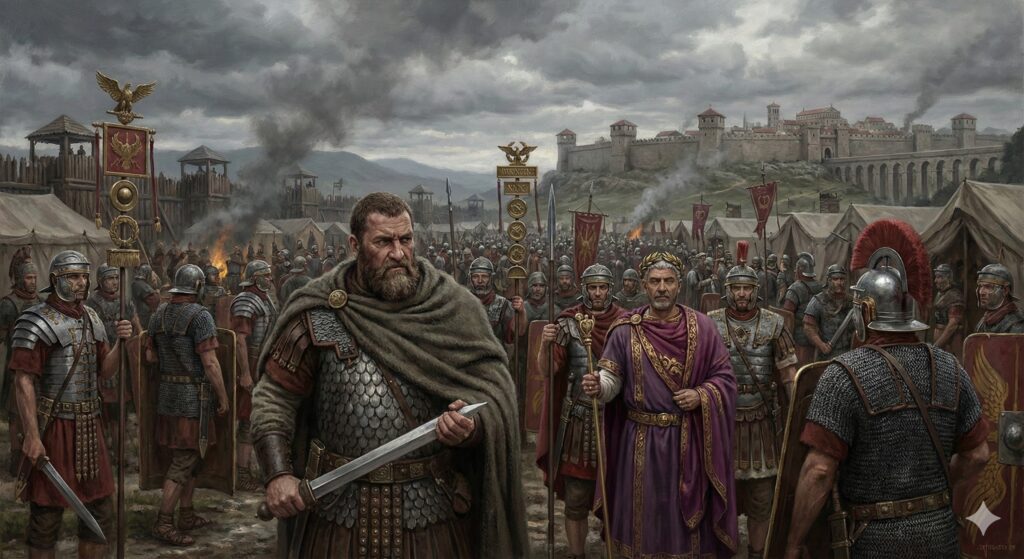
Maximinus Thrax’s reign ended violently in 238 CE when internal dissent within his own army reached a breaking point. During the siege of Aquileia, his troops grew weary of prolonged warfare and harsh conditions. The emperor’s increasing unpopularity, caused by his heavy taxation and strict military demands, eroded loyalty among the ranks. Facing dwindling support, a faction of soldiers assassinated Maximinus, effectively ending his turbulent rule.
The assassination triggered significant consequences:
- Imperial stability deteriorated rapidly as power struggles intensified between competing generals and claimants.
- The central authority weakened further, accelerating the fragmentation of Roman governance.
- Provinces and military commanders acted more independently, deepening political chaos.
This violent removal of Maximinus underscored the critical failures of relying solely on military might for imperial control. The empire’s inability to maintain cohesion under soldier-emperors revealed urgent needs for structural reforms.
A new phase of leadership emerged, focused on restoring order by addressing systemic weaknesses exposed during Maximinus’s reign. His fall marked a turning point, setting the stage for emperors like Diocletian to pursue comprehensive reforms aimed at stabilizing both the military and civil administration of Rome. The chaotic aftermath demanded innovative governance strategies beyond mere force and personal loyalty.
Such reforms were essential in light of the previous reliance on military might, which had resulted in a precarious imperial structure. This period also highlighted the importance of Roman engineering in maintaining effective governance and cultural exchange across vast territories. Moreover, understanding this transition is crucial for grasping the complexities of Roman governance and its enduring impact on modern political structures, a shift that can be traced back to the birth of the Roman Republic. Lastly, this era was marked by significant developments in art and culture which reflected the societal changes occurring during this tumultuous period.
Diocletian’s Rise: From Soldier-Emperor to Structural Reformer
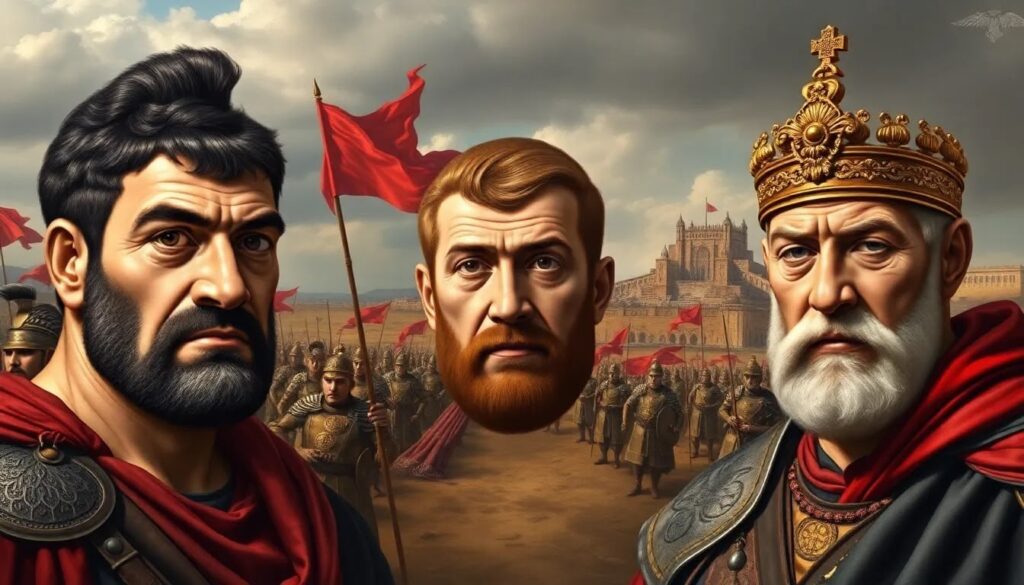
Diocletian emerged from the military ranks much like Maximinus Thrax, but his approach to governing differed significantly. His background as a soldier provided him with firsthand knowledge of the empire’s vulnerabilities during the Crisis of the Third Century. Recognizing that military might alone could not solve Rome’s deep-rooted problems, Diocletian pursued structural reforms to stabilize and strengthen imperial authority.
The Tetrarchy: Dividing Power for Better Governance
One of his most notable innovations was the creation of the Tetrarchy, a system dividing power among four rulers: two senior emperors (Augusti) and two junior emperors (Caesares). This arrangement aimed to:
- Improve governance by decentralizing authority
- Provide more effective defense across Rome’s vast borders
- Facilitate smoother succession and reduce internal conflict
Reorganizing the Military: Responding to External Threats
Diocletian’s reforms extended beyond political restructuring. The military underwent significant reorganization to better respond to external threats. He increased the size and capabilities of frontier armies while creating mobile units for rapid deployment. This helped restore security in regions plagued by barbarian invasions.
Expanding Bureaucracy: Enhancing Tax Collection and Local Governance
The bureaucratic apparatus also expanded under Diocletian. He introduced new administrative offices and increased the number of provincial governors, which enhanced tax collection and local governance. These changes addressed inefficiencies that previously undermined imperial control.
Economic Regulation: Curbing Inflation through Price Controls
Economic regulation formed a critical part of Diocletian’s strategy to restore order. His famous Edict on Maximum Prices attempted to curb rampant inflation by setting price ceilings on goods and services. Though enforcement proved difficult, it reflected a broader effort to stabilize the empire’s fragile economy.
Diocletian’s reforms transformed the Roman Empire from a fragile state marked by military upheaval into a more centralized and resilient system, setting a foundation that would influence imperial governance for decades.
However, it is essential to recognize that this transformation was not solely due to Diocletian’s efforts. The influence of the patricians, the wealthy and powerful elite of ancient Rome, also played a significant role in shaping the socio-economic landscape of the empire during this period. Their wealth and land ownership allowed them to exert considerable influence over various aspects of Roman life, further complicating the challenges that Diocletian sought to address with his reforms.
Diocletian’s Legacy: Transition from Principate to Dominate
Diocletian’s reign marked a fundamental transformation in the structure of Roman imperial power. This transformation moved the empire decisively away from the Principate phase, characterized by a facade of republican continuity and a single emperor often reliant on military backing, towards the Dominate phase, an openly autocratic system with centralized, institutional authority.
Key elements of this shift included:
- Institutionalized Autocracy: Diocletian abandoned the earlier soldier-emperor model where emperors rose primarily through military acclaim. Instead, he established a formalized hierarchy emphasizing imperial dignity, elaborate court rituals, and divine status for the emperor. This reinforced the emperor’s supreme authority beyond mere military command.
- The Dominate System: Power was shared among four rulers in the Tetrarchy, but each emperor exercised absolute control within their jurisdiction. This division was not a weakness but a deliberate structure designed to maintain order and respond efficiently to multiple threats across the vast empire.
- Bureaucratic Expansion and Military Reorganization: The imperial administration grew significantly under Diocletian, with new offices created to manage taxation, justice, and public works. The military was restructured into mobile field units and frontier troops, enhancing defensive capabilities.
These reforms had long-lasting effects. They stabilized an empire fractured by decades of civil wars, economic chaos, and external invasions that had begun with Maximinus Thrax’s ascent. The Dominate phase established by Diocletian would define Roman imperial governance for centuries, shaping how power was exercised and legitimized well beyond his own lifetime.
This transition from the Principate to the Dominate, however, wasn’t just a mere change in leadership style or political structure. It was part of a larger narrative that includes various aspects of Roman economic growth, legal foundations that shaped modern systems (Roman law), and cultural influences that continue to resonate today (the legacy of Ancient Rome). For those interested in delving deeper into these facets of ancient Rome, Men of Pompeii is an invaluable resource providing engaging content that brings the past to life.
Conclusion
The time from Maximinus Thrax to Diocletian is a crucial part of Roman history, with significant historical impact. During this period, soldier-emperors changed the political and military landscape of the empire, revealing weaknesses and sparking necessary reforms. The transition from unstable military rule to Diocletian’s organized autocracy set the stage for the empire’s survival in the following centuries.
Studying this transformative period offers valuable lessons on how different leadership styles and governance models can shape the destiny of a civilization. It encourages further exploration into other important periods of Roman history, such as the Julio-Claudian dynasty, the Severan dynasty, or the eventual decline of the Western Roman Empire.
Understanding these stories deepens your comprehension of Rome’s intricate legacy and emphasizes why the Soldier-Emperors Who Changed History continue to be key figures in studying imperial power and reform.
This era also saw significant changes in various aspects of Roman life:
- The introduction of The Twelve Tables, which were a major milestone in shaping Roman legal systems.
- The importance of Roman roads in maintaining and expanding the empire during this time.
- The influence of Stoicism, a philosophical school that emphasized living in harmony with nature and using reason, on Roman thought.
- The role of ancient Roman religion as a foundation of Roman identity, shaping politics, culture, and social structures.
- The lasting impact of Corpus Juris Civilis, which was commissioned by Emperor Justinian I in the 6th century AD.
These developments not only influenced the empire during this period but also left a lasting legacy that can still be seen today.
FAQs (Frequently Asked Questions)
Who was Maximinus Thrax and how did he rise to power as a soldier-emperor?
Maximinus Thrax was a Roman emperor of Thracian origin who rose from humble provincial beginnings through a distinguished military career, eventually commanding the Rhine frontier under Severus Alexander. After Severus Alexander’s assassination, Maximinus was proclaimed emperor by his troops, marking a significant shift in imperial succession towards soldier-emperors.
What were the key challenges and policies during Maximinus Thrax’s reign?
Maximinus Thrax’s reign was marked by continuous military campaigns against Germanic tribes such as the Alemanni, earning him titles like Germanicus Maximus. He implemented economic policies including doubling soldiers’ pay and imposing heavy taxes, which led to social unrest. His harsh governance style and persecution of Christians also contributed to political opposition from the Senate and revolts like those led by Gordian I and II.
What was the significance of the Year of Six Emperors (238 CE) in Roman history?
The Year of Six Emperors symbolizes extreme political volatility driven by military influence during the Crisis of the Third Century. Multiple claimants, including Gordian I and II, challenged Maximinus Thrax’s rule, leading to rapid changes in leadership that weakened central authority and accelerated Rome’s broader crisis during this tumultuous period.
How did Maximinus Thrax’s reign come to an end and what were its consequences?
Maximinus Thrax was assassinated by his own troops at Aquileia due to internal dissent. His death caused further fragmentation of Roman governance and instability, setting the stage for reform-minded leadership aimed at addressing the ongoing chaos within the empire.
How did Diocletian rise to power and what reforms did he implement as a soldier-emperor?
Diocletian emerged as a soldier-emperor amid the Crisis of the Third Century, focusing on structural reforms rather than just military solutions. He established the Tetrarchy system, dividing power among four rulers to improve governance and defense. His comprehensive reforms included reorganizing the military, expanding bureaucracy, and regulating the economy to restore order in the empire.
What is Diocletian’s legacy in transforming Roman imperial structure from Principate to Dominate?
Diocletian’s reign marked a fundamental transformation in Roman imperial structure by shifting away from earlier soldier-emperor models toward institutionalized autocracy under the Dominate system. This transition centralized authority, expanded bureaucratic governance, and introduced systemic reforms that stabilized the empire after decades of turmoil, influencing Roman administration for centuries.