
The Roman consul was a cornerstone of the Roman Republic’s political system, representing one of the highest elected offices in ancient Rome. This role combined supreme civil authority with military command, reflecting the Republic’s emphasis on shared power and accountability. Each year, two consuls were elected to govern jointly, ensuring no single individual could dominate Rome’s political landscape.
Understanding The Life of a Roman Consul: Duties, Perks, and Downfalls reveals how this office balanced immense responsibilities with notable privileges and considerable risks. Consuls led armies in battle, steered political decisions, and shaped foreign relations. Alongside these duties came prestigious honors and opportunities for advancement, but also intense rivalry and potential personal danger.
This article explores three key aspects of the consulship:
- The complex duties that defined the office
- The prestigious perks that came with power
- The significant downfalls and challenges consuls faced
Insights into these elements paint a vivid picture of what it meant to hold one of Rome’s most powerful and perilous positions. To fully grasp the implications of this role, it’s essential to understand the structure of power in the Roman Republic, which marked a significant transition in governance from monarchy to a complex political structure.
Moreover, while consuls played a vital role in the political arena, they were also significantly influenced by the economic landscape that was largely driven by agriculture during the Roman Republic and Empire.
The religious practices of the Romans were not merely a set of beliefs but a comprehensive system that intertwined with every aspect of their lives. From politics to culture and social structures, religion served as a cornerstone of Roman identity.
Lastly, understanding the rise and fall of the Roman Empire provides crucial context about the historical backdrop against which these consuls operated. This ancient civilization has left an indelible mark on the world, shaping politics, culture, and society in ways that continue to resonate today.
Additionally, exploring the influence of Greek philosophy such as Stoicism on Roman thought can provide deeper insights into the mindset and values that guided these powerful figures.
The Role and Duties of a Roman Consul
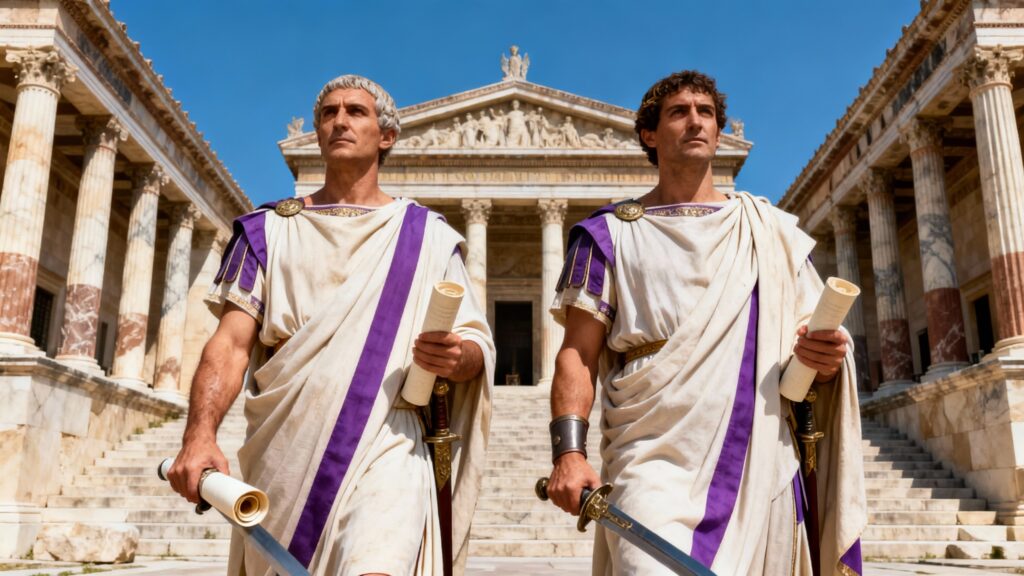
The consulship was defined by its unique dual consulship system, where two consuls held office simultaneously. This arrangement served as a deliberate safeguard against the rise of monarchy, ensuring power was shared equally. Each consul had equal imperium, meaning neither could dominate the other, creating a balance within the highest executive authority.
Responsibilities of a Roman Consul
Consul duties spanned multiple spheres, reflecting the demanding nature of the role:
- Military leadership formed a cornerstone of the consul’s responsibilities. Consuls personally led Roman armies in battle, commanding troops during military campaigns. Success or failure on the battlefield directly impacted their reputation and political standing.
- In political governance, consuls presided over the Roman Senate and popular assemblies. They proposed legislation, guided political debates, and enforced laws. Their authority made them key figures in shaping Rome’s domestic policy.
- Judicial functions were another vital aspect. Consuls acted as chief judges in significant legal cases, especially those involving public crimes or disputes that affected the state. This judicial authority reinforced their role as enforcers of Roman law. Notably, this enforcement was heavily influenced by foundational legal documents such as The Twelve Tables, which marked a significant milestone in the development of Roman law and legal history.
- Diplomatic duties required consuls to receive foreign delegations, negotiate treaties, and manage Rome’s relations with other states. Handling delicate diplomatic matters demanded skill and tact, influencing Rome’s standing internationally.
Importance of Veto Power and Transitioning Roles
The veto power between consuls was essential to prevent unilateral decisions. Either consul could block the other’s action, fostering cooperation or causing stalemate. This system ensured decisions required consensus or compromise.
After military campaigns, consuls transitioned back to civilian administration, resuming their political and judicial roles. This shift highlighted the dual nature of their office—both as wartime commanders and peacetime magistrates.
The life of a Roman consul demanded versatility, balancing military command, legislative leadership, judicial oversight (including navigating complex issues like the legal status of women in Rome), and diplomacy. Mastery in each area was crucial for effective governance and sustaining Rome’s republican ideals.
Influence on Modern Culture
Interestingly, these aspects of Roman life have been explored through various mediums today, such as role-playing games that allow players to immerse themselves in historical settings like ancient Rome. Furthermore, the influence of ancient Roman culture continues to pervade modern society:
- In law: the Corpus Juris Civilis has left an enduring impact on modern legal systems.
- In mythology: Roman mythology has significantly influenced contemporary culture and societal norms.

The Prestigious Perks of Holding the Consulship
Holding the consulship was more than a political role; it was a symbol of honor and elevated social status within Roman society. Being elected consul instantly marked you as one of Rome’s most powerful and respected individuals. This prestige extended beyond mere recognition—it translated into tangible influence across military, political, and social spheres.
Authority and Power
The imperium defined much of the consul’s authority. It granted supreme executive power, allowing consuls to command armies in the field and govern provinces with near-absolute control during their term. This authority was unmatched by most other magistrates and underscored the consul’s role as both military leader and top civil official.
Celebrating Victories
Victorious consuls could celebrate triumphs, elaborate public ceremonies that showcased military success. Triumphs were grand parades through Rome, featuring spoils of war, captives, and legions marching in honor of the commander. These events reinforced a consul’s reputation, bolstering personal prestige and political capital.
The Divide in Daily Life
However, the reality of daily life for the average Roman citizen varied significantly from that of a consul. In fact, daily life in ancient Rome was vastly different for the various social classes, especially the patricians and plebeians.
Pathway to Political Advancement
The consulship served as a critical stepping stone for further political advancement. It opened doors to influential patronage networks, where consuls could build alliances, reward supporters, and accumulate wealth. Patronage played a central role in Roman politics, allowing consuls to extend their influence well beyond their year in office.
Consul perks combined power, glory, and opportunity, making this office one of the most coveted positions in the Republic. The blend of imperium, political prestige, public acclaim through triumphs, and access to patronage networks created a unique platform for ambitious individuals aiming to shape Rome’s future.
Challenges and Downfalls Faced by Roman Consuls
The life of a Roman consul was filled with challenges that tested both their political skills and personal bravery. Here are some of the key challenges they faced:
1. Pressure of a One-Year Term
The one-year term limit was an important feature designed to prevent any one person from becoming too powerful, but it also put a lot of pressure on consuls to achieve quick results. This short time frame required them to make decisions and take action rapidly, leaving little opportunity for long-term planning or gradual changes.
2. Conflicts Between Power-Sharing Consuls
When two consuls shared power, it often led to conflicts or political deadlock. Each consul had equal authority and could block the other’s decisions, which could either protect the Republic or hinder governance. When they couldn’t work together, it paralyzed important government functions and exposed the weaknesses of the Roman political system.
3. Risks in Military Leadership
Being a consul meant being responsible for leading the military, but it came with significant personal risks. Commanding armies in battle meant facing dangers not only to their political reputation but also to their lives. Losing wars could ruin their reputations, while winning required skillful management of both soldiers and public expectations.
4. Complications from Political Rivalries
Intense political rivalries and factionalism made the consulship even more complicated. Rival groups in the Senate and among the aristocracy often saw consuls as tools or threats. These rivalries could escalate into violent confrontations, assassination attempts, or exile, making it just as difficult to survive politically as it was to command in war.
5. Competition for the Consulship
During the late Republic, there was fierce competition for the consulship, which made things even more unstable and led to political violence. Many ambitious individuals resorted to manipulating elections, forming dangerous alliances, or provoking civil unrest in order to gain power.
Moreover, these challenges were not isolated incidents but part of a larger societal structure that included various classes such as the plebeians. Understanding their lives provides essential context for grasping the socio-political dynamics of Rome during this tumultuous period.
Lastly, the legacy of these consuls extends beyond their time in office. The principles of Roman Law established during their tenure continue to influence modern legal systems today. Similarly, the infrastructure they developed such as Roman roads, played a significant role in maintaining and expanding the empire.
The challenges faced by consuls reflected the complex balance between authority and accountability, personal ambition and public duty that defined the Roman Republic.
Checks, Cooperation, and Balancing Power in the Consulship
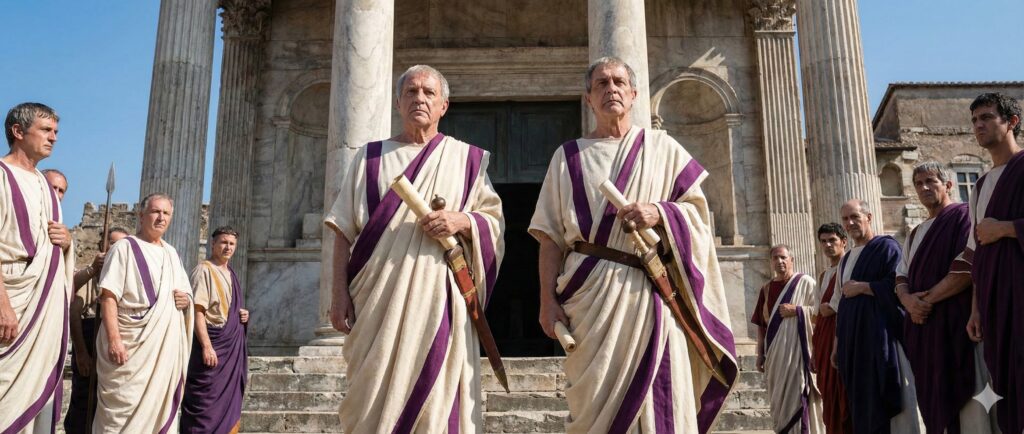
The Roman consulship was built on a system designed to prevent the concentration of power in a single individual. This was achieved through power sharing, where two consuls were elected annually, each holding equal authority. This dual leadership acted as a fundamental check on power, ensuring no consul could dominate the Republic’s executive functions.
The Role of Veto Power
A defining feature of this system was the veto power (intercessio) granted to each consul. Either consul could block or nullify the other’s decisions, a mechanism specifically intended to prevent unilateral actions that might threaten the Republic’s stability. This veto was not just a political tool but a strategic safeguard embedded in the governance framework.
Importance of Cooperation
The necessity of cooperation between consuls was paramount. Effective governance depended on their ability to collaborate on military campaigns, legislative proposals, and judicial matters. When consuls aligned their efforts, decisions were balanced and representative of broader interests. However, failure to cooperate often resulted in political deadlock, stalling critical actions and frustrating the Republic’s functioning.
This intricate dance of shared power, veto usage, and mutual reliance defined the consulship’s unique place in Roman political culture. It exemplified an early form of checks and balances, where authority was distributed and controlled to maintain the Republic’s ideals.
The Influence of Roman Architecture and Engineering
In addition to these political structures, Roman architecture and engineering feats also played significant roles in shaping the governance and cultural identity of ancient Rome. The Romans were not merely builders; they were innovators who transformed the architectural landscape of their time with structures that served both functional purposes and as testaments to their power.
Moreover, Roman engineering had a lasting impact on future generations, serving as a foundation for contemporary infrastructure systems. These engineering marvels not only connected far-flung regions but also ensured effective governance and cultural exchange.
The Role of Patricians in Ancient Rome
Underlying these political dynamics were social hierarchies such as that of the patricians, the wealthy elite who wielded significant influence over Roman luxury and power. They were usually rich landowners who had substantial control over resources and decision-making processes in ancient Rome.
The Lasting Legacy of the Roman Consulship
The Roman political legacy, significantly shaped by the consulship, serves as a foundational model of republican governance. The principle of shared executive power established by dual consuls has influenced later republics and modern democratic systems striving to avoid autocratic rule. By dividing supreme authority between two magistrates with equal imperium, Rome set a precedent for balancing power within the highest offices of government.
Key lessons emerged from this system:
- Checks against tyranny became institutionalized through mutual veto and limited terms, preventing any one individual from dominating the state.
- The consulship demonstrated how power-sharing could enable both cooperation and competition, creating a dynamic but controlled political environment.
- The model offered a tangible example of accountability, where rulers were subject to legal and societal constraints despite their considerable authority.
During the Republic era, the consulship shaped Rome’s political structure by embedding these ideas into its constitution and daily governance. It created a framework where military command and civil administration were intertwined yet regulated. This balance sustained Rome’s expansion and internal stability for centuries, significantly aided by the Roman Army which played a crucial role in achieving victories across large areas.
The spectacle of ancient Rome, including events like gladiatorial games, also reflected the intertwining of entertainment with political authority during this period. Many modern systems reflect the consulship’s influence, adopting similar mechanisms to distribute executive functions and maintain checks on power. Its legacy continues to inform debates on governance, authority, and the prevention of tyranny in representative governments worldwide.
Furthermore, Ancient Rome’s legacy remains a cornerstone of Western civilization. From its inception as a small city-state to its transformation into a vast empire, Rome’s influence is both profound and enduring. The impact of Roman culture, governance, and innovations can be seen in various aspects of modern society.
For those interested in delving deeper into this fascinating world, resources such as Men of Pompeii offer engaging content that brings the past to life. Additionally, it’s worth noting that some aspects of the Roman consulship have been examined in depth within academic circles. For instance, certain studies have explored how the principles established during this era continue to resonate in contemporary legal frameworks and governance structures globally – an intriguing area for further exploration for anyone interested in law or political theory.
Conclusion
The life of a Roman consul was a complex mix of power, responsibility, and danger. This position was vital in maintaining Rome’s republican ideals, a system that came about after the overthrow of the last king of Rome, which aimed to stop autocracy by dividing authority between two leaders.
Key takeaways from the summary Roman consul life:
- Consuls handled significant military and political responsibilities while facing constant pressure.
- The one-year term and veto power acted as crucial safeguards against tyranny.
- Even with benefits like prestige and imperium, consuls dealt with major obstacles such as political rivalries and dangers on the battlefield.
The Life of a Roman Consul: Duties, Perks, and Downfalls shows how this position influenced Roman governance by combining shared power with accountability. The military duties of consuls often included overseeing gladiators, who were seen as either heroes or victims by the public.
FAQs (Frequently Asked Questions)
What were the primary duties of a Roman consul during the Republic?
Roman consuls held a dual role encompassing military leadership, political governance, judicial functions, and diplomatic responsibilities. They commanded armies during campaigns, presided over the Senate and assemblies, proposed legislation, acted as chief judges in certain legal cases, and managed foreign delegations and treaty negotiations.
How did the dual consulship system prevent the rise of monarchy in ancient Rome?
The Roman Republic elected two consuls simultaneously with equal authority, ensuring power-sharing and mutual checks. Each consul possessed veto power over the other’s decisions, a mechanism designed to balance authority and avoid concentration of power in a single individual, thereby preventing autocratic rule.
What were some prestigious perks associated with holding the Roman consulship?
Consuls enjoyed significant political prestige and elevated social status. They held imperium, granting supreme executive authority in military and provincial governance. Victorious consuls could celebrate military triumphs, enhancing their honor. The position also offered opportunities for political advancement and wealth accumulation through extensive patronage networks.
What challenges and downfalls did Roman consuls commonly face?
Consuls operated under intense pressure due to their one-year term limits requiring swift achievements. The power-sharing dynamic sometimes led to conflicts or governmental gridlock. Military leadership posed personal risks during campaigns. Additionally, fierce political rivalries and factionalism threatened their careers and lives, contributing to instability in the late Republic.
How did checks and cooperation function within the Roman consulship to balance power?
The system mandated electing two consuls with equal authority who exercised veto powers against each other’s decisions to prevent unilateral actions. Effective governance depended on cooperation between consuls to avoid deadlock. This arrangement served as a critical check on power concentration while facilitating balanced decision-making.
What is the lasting legacy of the Roman consulship in modern political systems?
The Roman consulship influenced later republican ideas emphasizing shared executive power balanced by mutual checks against tyranny. Its model demonstrated how balancing authority through cooperation and accountability can sustain republican ideals. This legacy shaped Rome’s political structure during its Republic era and inspired aspects of modern governance frameworks.